Featured

A Blog Post About Trash

See my interview about this topic with Scripps National News!

My rural, desert community may be small, but it has a few eye catching features. First are the windmills, which make up the largest wind farm in America. For as big as they look from the gas stations on the 58, you don’t really get a sense of how massive they are unless you take the scenic drive up into the mountains. They’re wonders of engineering, design, and a daily reminder that people can come up with pretty big solutions when we try.

The next thing you’re likely to notice is the garbage, because it’s hard to miss. I’m not trying to be unkind or air my town’s dirty laundry. Anyone who passes through our town can see it, and those of us who live here are intimately familiar with the refuse that lines our fences and curbs. The shrubs that grow in vacant lots look like weird little Christmas trees with branches full of shredded plastic bags, glittering in the sun like garland.

The reason we are home to one of the world’s largest wind farms is that our area has uniquely windy conditions. Average daily winds are around 10-20 mph, and as I write this, the winds are blowing closer to 40 mph with gusts up to 60 mph.

Today is also trash day, so people are starting to set their garbage cans out. What happens next is pretty predictable. The wind topples over garbage cans, and then it’s not long before it gets carried through the streets and across the desert.

The wind isn’t the only natural force that contributes to our trash problems. The dogs that roam through the area will gladly open up a garbage bag, and a raven can empty a trash can in minutes looking for something to eat. 

As a result, it looks like Mojave is home to a bunch of litter bugs who just don’t care much about their community. This makes tourists who pass by less careful about catching the trash that slips from their cars. Even in our local Facebook pages, we often blame each other for the trash that piles up. Vaguely passive aggressive posts will finger wag at “those people” for not picking up after themselves.

A Mojave alley. Photo by Joyce Nash

Not only are our trash receptacles inadequate for our environment, there’s also not enough of them. In our park, which is often strewn with litter, there are only five garbage cans! There used to be more, but they were removed and only those few were replaced. 

We are also a community with high rates of poverty and a higher than average rate of renters vs. homeowners. There are frequently many people (often extended family) living in one house or apartment. The single garbage cans allotted to each address are just not enough.

Few homeowners are eager to spend more money on additional garbage cans for their tenets, and few renters want to make it a problem with their landlords (especially when there are so many other problems that need to be fixed). And so the trash piles up.

It is easy to see our trash problem as an issue of “personal responsibility.” If all of us in Mojave would just be personally responsible for our own trash — and maybe also the trash that blows into our yards — then the problem would be solved. 

It wouldn’t, though. That doesn’t address the issue of not having enough receptacles to hold it, or what to do when the wind, birds, or dogs inevitably redistribute it. 

Our trash problem isn’t because we’re too lazy or irresponsible to deal with it. Our trash problem is a failure of infrastructure and civic planning. 

We have figured out how to harness energy from the wind with giant windmills, but we can’t figure out a wind-proof trash can? We have trash cans that keep out bears, but not ravens?

Considering all the other incredible things people have figured out, this trash problem doesn’t seem impossible. It is a matter of priorities, though, and for the leadership in Kern County, things like “providing a basic level of services” and “ensuring safety and quality of life” seem to be low on the list.

I’m not writing this because I have a clever trash related solution. I wish I did, because the wind has already knocked one of my neighbor’s garbage bags out of their can. What I want is for us to challenge the story we tell ourselves when we see trash piled up against fences, whether they’re here in Mojave or somewhere else.

Did that trash get there because lazy people didn’t pick up after themselves? Or did the trash pile up as a result of lots of different factors?

What we think about trash on the road matters. If we believe it’s the result of lazy people, then that will impact how we treat those people and that place. Lazy people don’t need help, they just need to get to work. But, if we see the trash as a failure of planning, leadership, and collective action, then that opens up all kinds of possible solutions. 

I haven’t really touched on the environmental impact of all this loose garbage, or the health and safety risks to people and animals that it presents. All of these problems are a real part of the day to day life here. Do you avoid walking in sandals due to dirty diapers, food wrappers, and other trash on the sidewalk? I do.

For as urgent as these problems are, I doubt we’ll get to a solution as long as we see the trash as a moral failing of our community. The only thing lazy here is the “personal responsibility” argument, so let’s put it where it belongs: in the trash. 

Featured

How I Got To Pelvic Floor Physical Therapy For Endo

I have endometriosis, and there’s a lot I want to say about that. To start, I want to share some of my experiences with pelvic floor physical therapy (PT). This is a topic that’s getting an exciting amount of attention among doctors and people with endo, and I want to add my story to help anyone who might be considering whether this is a good choice for themselves.

Pelvic floor PT is becoming an increasingly common recommendation for people with endo, but many doctors don’t explain why it’s a good idea or provide any guidance for how to find a pelvic floor physical therapist, or what to expect once you get there.

And I want to reiterate: my experiences are my own, and what has worked for me may or may not work for you. Part of navigating a chronic disease we don’t know much about is reading about other people’s trials and errors. So here are some of my own trials, errors, and successes to help inform you as you make your own roadmap to treating your endo.

Why Does the Pelvic Floor Need Physical Therapy?

I first heard about pelvic floor PT about ten years ago when I was working as a full time Pilates instructor. We had a pelvic floor PT visit to do an educational seminar, and she explained that the pelvic floor is made up of several different muscles working in conjunction with our abs, glutes, and back muscles to support our movement and our organs. 

The muscles that make up our pelvic floor can become dysfunctional due to injury, disease, surgery, pain (that’s right – pain itself can cause dysfunction), or patterns of over/underuse. Dysfunctional muscles may either be overly tight or spasmodic and therefore weak, or they might not engage well and be weak. Muscle dysfunction is rarely isolated to one muscle; even if it starts in one place, the dysfunction will spread to other muscles around that joint or body part as they try to compensate for the original weakness.

When it comes to the pelvic floor, the relationships between these muscles, pain, the gut, the brain, and how dysfunctional pelvic floor muscles impact the rest of our movement is complicated. As a result, the symptoms of pelvic floor dysfunction are often mistaken for other conditions – which, in some cases, are caused by (or are related to) the pelvic floor dysfunction to begin with! 

Pelvic floor dysfunction can send doctors on wild goose chases around our anatomy. Symptoms of pelvic floor dysfunction can include pelvic pain, back pain, rib pain, sciatic pain, pain during intercourse, and pain while urinating or bowel movements. The PT who was presenting the seminar said that pelvic floor dysfunction can present itself anywhere between the ribs and the knees.

There is a high occurrence of pelvic floor dysfunction among people with endo, but the nature of that relationship is unclear. It’s not known if one causes the other, but treating the dysfunctional pelvic floor muscles can be a way to treat and manage pelvic floor pain related to endo.

Which brings me to my story with pelvic floor PT. It’s a long one, so go ahead and grab snacks.

After the Laproscopy, Then What?

I had my first (and so far, only) laparoscopy with ablation in October of 2017. At my post op appointment, my gynecologist recommended either birth control or Lupron, neither of which I’m interested in. (I am in no way knocking the decision to try one of these options, they just don’t feel right for me – another blog post). I asked my gynecologist if pelvic floor PT might help, and she said no.

After my lap, my symptoms got worse. As the months went on, I noticed that not only were my periods getting worse, I was now getting similarly intense pain during ovulation and sex. I was also experiencing pain in my thoracic spine and sternum so intense I couldn’t get out of bed on some days. 

The thoracic pain is what escalated out of control. It felt like being constantly stabbed in the back, just to the right of my spine right at where my shoulder blades sit. My sternum felt locked, and the stabbing pain in my chest that accompanied any movement seemed to say, “Try it, and something breaks.” I could barely breathe or lay down without agonizing pain.

After a not at all fun trip to the ER, I went to my primary care doctor who prescribed a muscle relaxer, which honestly did help, even more than the tramadol he also sent me home with. The relief I felt from the muscle relaxers made me think that maybe there was a musculoskeletal component to my pain that wasn’t being addressed. I requested physical therapy, and I got a referral.

Back to Back PT

At this point, I was going to the physical therapist for my thoracic pain. While my pelvic pain was continuing to escalate, it didn’t seem like much could be done for that. I decided to focus on my back, which was so bad I could barely wash my hair or lift a glass of water to my mouth.

The first PT I went to was not a great experience. Along with endometriosis, I also have Complex PTSD as a result of childhood trauma and abuse. I’m sure all the traumatic experiences I’ve had with doctors haven’t helped. Even though I have a lot of experience with manual therapy, the lack of consideration for my medical history combined with the amount of physical touching and so much of his weight on my body made me extremely uncomfortable. I didn’t go back.

The next PT I saw for several months. His general take on my condition was that I needed to learn how to relax. Like so many doctors, this one over attributed my pain to my trauma. Once he heard childhood abuse, I could almost see the connection he made in his brain: Another anxiety case.

I kept going to those appointments mostly out of spite. I could feel that I wasn’t making improvement, but I was determined to go through the steps. I kept trying to bring up my pelvic pain, but the PT would say to see my gynecologist. I also kept going because I felt bad about ditching the first PT. I wasn’t sure if I could just pull up stakes and head to yet another office.

After seven months or so of not getting much further than, “you need to learn how to relax,” I decided to change my approach. It was an excruciating seven months, though. Physically, the manipulations and scraping he did along my spine and ribs would be sore for days, but also it was also mentally and emotionally painful to be made to think that I was the cause of my own pain. I stuck it out as long as I could, and probably for too long.

In my research on trauma, I had uncovered a technique called “biofeedback”. 

I found a PT that was not quite two hours from my home who offered this service. The focus again was on my back, so during a typical session, I sat in a comfortable chair while my PT placed sticky pads on my neck and upper back and a heart rate monitor on my finger. These pads were connected to a laptop that would show a measurement of how much activity was happening in my neck and back muscles.

The idea was that I would be able to use this visual information as feedback. I could see where my baseline of muscle activity was, and then the PT would talk me through meditation exercises to bring down the level of activity.

As it turns out, I’m really good at that. I can take deep breaths and bring down my heart rate and muscle activity. The evidence was right there on the screen. My back pain was unfazed. Maybe, my pain wasn’t because I couldn’t relax after all. 

This PT was also doing some manual therapy on my back, and in one session, I asked her to look at some recurring pain in my right knee. As she poked around she observed that my quads were extremely tight. When she got to my adductors (inner thigh muscles), her eyes widened. “This is hypertonic,” she said. (Hypertonic refers to a muscle that is too tight and/or unable to relax.)

I nodded and told her that’s how my inner thighs always feel, and also my pelvic floor muscles. I asked her if she thought pelvic floor physical therapy might help. She said it absolutely would, and she got me a list of referrals.

From Back to Pelvis

It had now been about a year since I first went to a PT for my back, and I was starting to understand that I’d been barking up the wrong tree. I went through the list of pelvic floor specialists and found one that accepted my insurance.

At this point, I’d been in pain long enough and I was frustrated enough with the process that I wanted to see the best damn physical therapist I could find. I decided to go with a practice in Beverly Hills, which was about a three and a half hour drive from my home. 

When I called to make the appointment, I insisted on seeing the therapist who is the head of the practice. It was a little pushy of me, yes, but I figured I’ve gone too far to see someone who is anything less than an expert in this type of care.

In my first appointment, the PT did a thorough assessment of my posture, movement, and muscle function. The internal work wasn’t as terrible as I thought it would be. It felt like having a trigger point massage done on the inside of my vagina.

I transitioned to a different therapist after a few sessions who turned out to be absolutely wonderful. I saw her once a week for the next several months. She identified that I also have scoliosis, and we alternated sessions between working on my pelvic floor and my thoracic spine. She discovered which of my pelvic floor muscles are too tight (I’m looking at you, right side obturator internus), and her manual therapy plus the at-home stretching and exercises brought a lot of balance to my pelvic floor.

A typical session would start with a quick assessment. From there, my PT would see if my SI joint needed any mobilizing and she would do whatever external work my glutes were needing. If we were doing internal work, she would leave the room while I took off my leggings and got under a sheet.

I would lay on my back with a pillow under my knees and my legs slightly spread. She would sit next to me and with lots of lubrication, use a finger to massage and manipulate my pelvic floor muscles from inside my vagina. Occasionally I would have to do something like press my right knee into her other hand while she palpated internally. But mostly we would have light chit chat in between her asking me how things were feeling.

As my pelvic floor and glute muscles got the stretching and strengthening they needed, my thoracic spine finally started to hurt less. Our pelvic floor is kind of like the foundation to a house. If our foundation gets out of whack, that imbalance will reverberate up and down through our muscles and skeleton. I don’t think even another five years of PT on my back would have been successful if it weren’t for the pelvic floor work.

My progress was slow but steady. I was keeping track of my symptoms, and noticed all sorts of things improving. I wasn’t needing to urinate as often; bowel movements were more regular and far less painful; sex was less painful; my posture was improving; and my back was hurting less.

The biggest surprise for me was just how much pain reduction happened when I addressed my pelvic floor muscles. I had thought for sure that at least some of the burning, stabbing, ripping, pulling, and electricity like pains I had around my pelvis, vagina, and anus were outside the scope of a PT. No way in heck is manual therapy going to make it not hurt when I pee.

I was mistaken. In my case, there was all sorts of pain that became far more manageable when my pelvic floor muscles got some attention. I don’t want to oversell anything, though.

Stuff still hurts. It hurts less, though, and it’s far more manageable. I can have sex most of the time without pain. My bowel movements almost never make me sweat and throw up anymore, except on the worst day of my period. I can generally exercise without my back screaming in pain or my sternum getting locked in place. 

All things considered, for me, PT was totally worth it, and I enthusiastically recommend it to others. That’s saying a lot because it was a huge pain in the ass to get to that step (almost as much as the literal pain I had in my ass). I have more I want to share about this topic, but I’ll leave it there for now. If you’re considering pelvic floor PT for yourself, I hope reading about my experience helps you make the choice that’s right for you.

Resources:

Read more about pelvic floor dysfunction here: https://www.healthline.com/health/pelvic-floor-dysfunction#diagnosis

Read more about pelvic floor dysfunction and endo here: https://centerforendo.com/the-significance-of-pelvic-floor-muscle-dysfunction

Mapping Hurricane Helene

This is my account of what happened after I made a map of people who needed help in Asheville and WNC following Hurricane Helene. All names have been changed.


Hurricane Helene hit North Carolina early on a Friday morning. I was up around 4:00 am, and the wind and rain were picking up in my area north of Charlotte. I wanted to hang out online with other people going through the storm. I went to Reddit and checked the subreddits for Florida, Tampa, and Georgia where the worst of the storm was passing through. These online spaces were surprisingly quiet – people were posting about heavy rain and wind, but I didn’t see reports of major damage.

I saw people in these subreddits making similar comments with expectations that the storm would be worse. I pulled up the weather radar and I could see that the storm was taking a slightly different path than what had been predicted. Helene formed into a category 5 hurricane with immense speed. Because of this, experts didn’t have the same volume of data they normally do to predict the storm’s path.

On Thursday night before the storm hit, experts predicted that Helene would hit Atlanta and then cut west towards Tennessee. My area north of Charlotte was on the edge where predictions went from, “it will be a bad thunderstorm,” to, “shit might get intense.”

On Friday morning, I watched the radar with alarm as the storm was cutting a more easterly path. It didn’t hit Atlanta – Helene threaded the needle through western Georgia. Then, the eye of the storm was headed right over western North Carolina. North Carolina’s mountains and foothills would receive the “dirty” right side of the hurricane which is most likely to contain tornadoes and severe wind gusts.

I jumped over to the Asheville subreddit, and I found storm chatter. It was around 5:00 or 6:00 am, and people were commenting in a hurricane megathread that the winds and rain were hitting hard in different neighborhoods. I was jumping between Reddit and a weather app, and as the eye of the storm got closer, I saw an interesting pattern emerge in the megathread.

What had been the usual mish-mash of online comments turned into an orchestrated reporting effort. First, there was a string of comments about trees coming down, some on people’s houses. Then, a string of comments: transformer blown; transformer just blew; heard a pop – transformer out.

The megathread took on a tone of urgency and fear. People shared mandatory evacuation orders, but some people said they couldn’t get out because trees were down. Confusion. Reports of landslides and floods.

And then, the Asheville subreddit went dark.

After the storm

Those of us outside the worst of the storm’s path would soon learn that Asheville and WNC’s entire communications infrastructure had been taken offline. Not only was there no electricity, phone service, or cell service – the physical grids and infrastructure had been wiped out

On Saturday afternoon after the storm, a handful of people began posting in the Asheville subreddit and in Facebook groups for WNC communities. I watched helplessly as people described being stuck in landslides, trapped in their homes, and unable to get through to 911. 

I have some familiarity with post-disaster landscapes, and I could see that a small volunteer army was mobilizing in central and eastern NC. Groups like the United Cajun Navy, Operation Airdrop, and many others were organizing aircraft to find survivors and deliver supplies.

That day, Buncombe County released a form to report missing people. I heard that they received thousands of submissions within the first several hours. On Saturday evening, someone who works in Buncombe County government used their personal Reddit account to share a spreadsheet with 100 entries from those submissions that had been marked “urgent.” Their post title was, “Asheville – help us find these people.”

I looked at that spreadsheet, and again, some of the reports included addresses. At this point, it was clear that people couldn’t reach 911, and if they could, the counties and cities in WNC had been absolutely devastated.

Now, weeks after the storm, we know that there were nearly 1,900 landslides in the impacted region. Now, we know that dams failed, mountains fell, and the rivers cut entirely new paths through hollers and valleys to take out hundreds of homes and entire roads. At the time, we didn’t know any of that – only that the situation seemed extremely dire due to the lack of information.

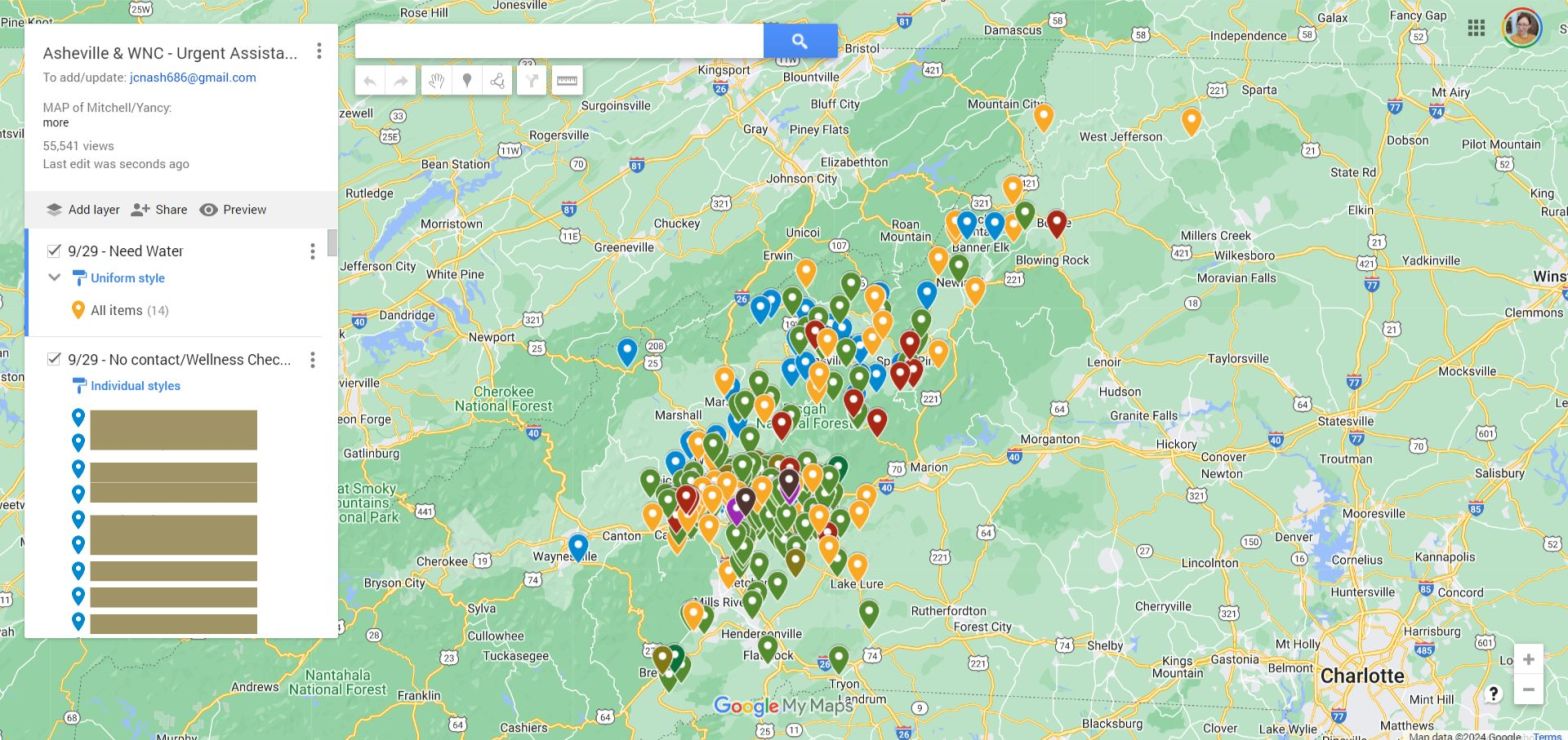
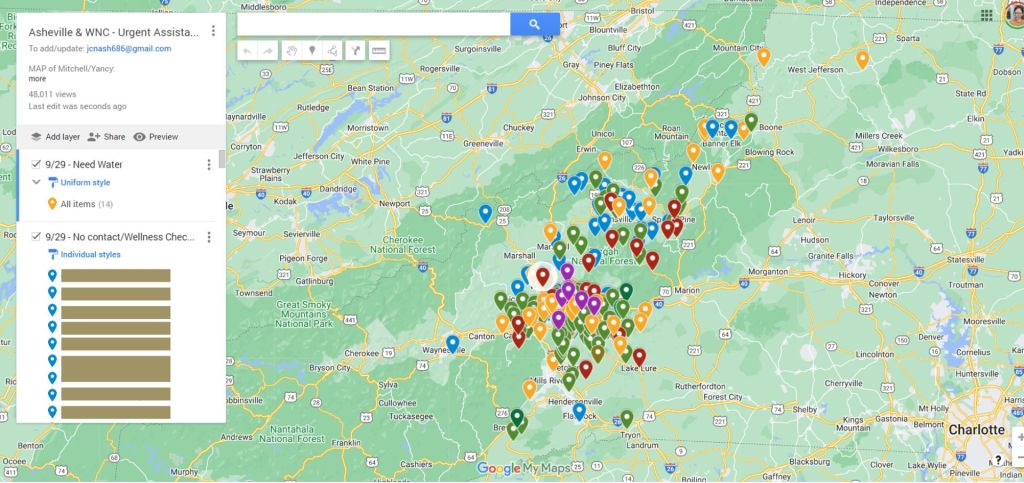
On Saturday night, I looked at the spreadsheet from Buncombe County again, and I made a Google map. I dropped red pins for the people who had locations in their requests for urgent help. On Sunday, I shared the map in a Reddit post, and I started sending it to search and rescue groups that I found on Facebook.

It’s hard to describe the chaos of the days that followed Helene. There was almost no communication within the impacted region. Dozens, if not hundreds, of volunteer crews were simultaneously moving into the area – but none of them knew where to go or were in communication with each other. 

When I made the Google map, I figured it would be accurate for about 48-72 hours. I didn’t have a method to keep it updated, and I expected that there would be some obvious sign that a state or federal entity was managing the situation. I joked with my husband, “Maybe I’ll get a call from FEMA telling me to cut the crap.”

The map keeps growing

However, as Sunday and Monday progressed, the map began gaining traction on Reddit. People made comments, sent DMs, sent emails, and text messages with more reports that they needed help. I was the only person with access to update the map, and I added pins as quickly as I could.

As people in Asheville gained internet access, they began using the map to check on people near them. Other Redditors spontaneously helped me to verify and follow up on reports.

One of the first people I connected with was a guy named Andrew who lives south of Asheville. He saw a pin at the Irene Wortham Center – this is a residential home for disabled adults. Someone else had reported that they needed water and gas for generators. Andrew got them water and gas over the course of several days, making sure their generators could keep life-saving equipment running.

At the same time, I made contact with people who were managing maps and lists of missing people in Yancey, Avery, and Mitchell counties. Over late-night Zoom calls and Facebook chats, we compared data and shared phone numbers of people to connect with. It was a race to collect, document, clean, and update data, and we opened up the taps to share our information with each other. We all knew that losing this race meant people’s lives.

This all happened in the first week after the storm at a time when there was an urgent need to find people and distribute water, food, and supplies. However, counties and cities did not have the ability to respond because their own resources had been impacted by the storm. State and federal entities couldn’t respond because they aren’t nimble enough to mobilize that quickly, and in many cases, they had to clear out and rebuild roads to get to the people who needed help.

I dropped and updated hundreds of pins on the map, each one representing someone who needed help. Each pin represented multiple other people – those who made the report, those who physically checked in, those who followed up on social media, and then also people who watched from a distance because the Google map was one of the few points of visibility into a profoundly opaque situation.

The Wednesday following the storm, I got a message from someone with Florida Fish and Wildlife. Florida had dispatched them to help since they are one of the state’s leading hurricane relief agencies. I spoke with a guy named Roger, who was leading a crew.

In static-filled calls, he explained that the official chain of command didn’t know shit, and his guys needed to know where to go. He found my map and needed to know where I was getting my information. I explained that I was using first and second-hand reports from social media. Over the next several days, Roger called me to give updates on pins and different areas as his crew cleared roads and delivered supplies.

Meetings and map reading

Around this time, about five to six days after the storm, I made contact with someone with the city of Black Mountain, people with Samaritan’s Purse, Special Forces Charitable Trust, and many other groups. For days, all I did was update the map and answer questions. People had Blackhawks, fixed-wing aircraft, and heavy machinery, and they needed to know where to go.

The problem was that people in the most impacted areas still couldn’t tell us that they needed help because there was still no electricity or communications infrastructure. By this time, it was clear to me that my map was a visual representation of survivorship bias – the areas that were the hardest hit were probably the areas where there weren’t any pins.

By the Thursday following the storm, nearly a week later, I realized that I was in communication with multiple different groups – but they weren’t talking to each other. I created a nightly Regional Coordination Call.

The first night, my meeting was attended by some Special Forces guys at Fort Bragg, people from Special Forces Charitable Trust, someone with Samaritan’s Purse, a former White House advisor, and two former executives from the world’s largest paramilitary organization.

They all had Blackhawks, and I was the person with the map.

I explained to them that on the map, red pins represented an urgent need – but those pins may be less accurate since responding agencies are likely more focused on them. Yellow pins are reports of people who need supplies, and blue pins represented people who hadn’t been heard from yet.

I explained that they had to read the map for patterns. They weren’t entirely satisfied. People with Blackhawks want a certain level of veracity before spending the money to send them out, and nobody had that.

Over the next several days, I continued to update the map with a small army of people online who were sending me updates. My phone buzzed constantly with notifications and questions from search and rescue crews. The nightly meetings continued to grow. I had a conversation with the president of the Special Forces Charitable Trust after one meeting where he asked me, “So, who’s in charge here?”

I responded with something like, “That’s a great question, sir, and I’d love to ask you the same thing.” He gave me his direct cell phone number with instructions to call him if I had new insight on where to send his resources.

It quickly became clear – again, due to a lack of information – that the official response was in shambles. To be fair, it is difficult for any region to prepare for an apocalypse. At the same time, groups with search and rescue capabilities were getting in each other’s way, not communicating, and not getting to people who needed help.

Extended chaos

I don’t use the word apocalypse here lightly. I read an article recently from an expert who said that Helene wasn’t just a weather event – it was a geologic event. The landscape changed in ways that people don’t usually witness.

Neighborhoods and communities are gone. I-40 between NC and TN will take months to fully rebuild. Eight weeks after the storm, Asheville finally has potable water. In more remote areas, it will be months before all of the roads, bridges, and utilities are fully restored.

Nearly two weeks after the storm, the sky over my house was clogged with air traffic. At that point, a mid-air collision seemed like an inevitability. After I started holding nightly coordination calls, I quickly had green berets and army people entirely up my asshole. While many of these folks were active duty, they were acting in a volunteer capacity. There were some official deployments of green berets from Fort Bragg, but the landscape of official vs. unofficial duty remains extremely blurry to me.

The army people were looking at my map and using words like “money maker” and “intelligence product.” One former executive from the paramilitary organization called me directly several times to discuss updates in my map as it progressed. A former white house advisor called me when one of his pilots was shot at from the ground.

Another organization I was working with narrowly avoided a confrontation with a group of armed people in a remote area. The situation on the ground was shifting faster than anyone could keep up with, and rumors and propaganda were spreading like wildfire.

I was put in touch with many people by a couple of key army folks working behind the scenes. One of them, Mike, recognized the importance of the map and the network of people I had built, and he pulled almost every string in his network. He threw people at me, like Chris, who had almost a decade of experience in Navy intelligence.

I want to take a moment here. Before all of this, I was vaguely familiar with the green berets. I quickly came to learn that these are the people that get sent into war zones to mobilize and train insurgent (aka guerilla) forces. The people I was working with had been in Afghanistan and similar situations.

What Mike and the other green berets realized is that I had effectively mobilized a guerilla force for the purpose of disaster relief. And in doing so, I turned their entire method on its head. Normally, their method of organizing is top-down – in other words, people with resources (such as green berets) arrive in an under-resourced area and tell people without resources (such as insurgent forces) what to do.

The system that I applied was the opposite – people without resources (those impacted by Helene) were telling people with resources where to go and what to do via the Google map. And because the Google map was public, everyone could see it. Since there was no centralized chain of command for the dozens of responding agencies, the map became what the army called the Common Operational Procedure: the thing everyone could reference to plan their operations and move resources.

Rescue turns into recovery

A week after the storm, we were still hoping to find people alive. The people running search and rescue crews suspected that there were remote areas that hadn’t been reached yet, but people in remote spots were also likely to be more well-supplied than people in cities. There was hope, but time was running out. We needed to know where to send the people who could perform high-level search and rescue, field medicine, and air evacuations.

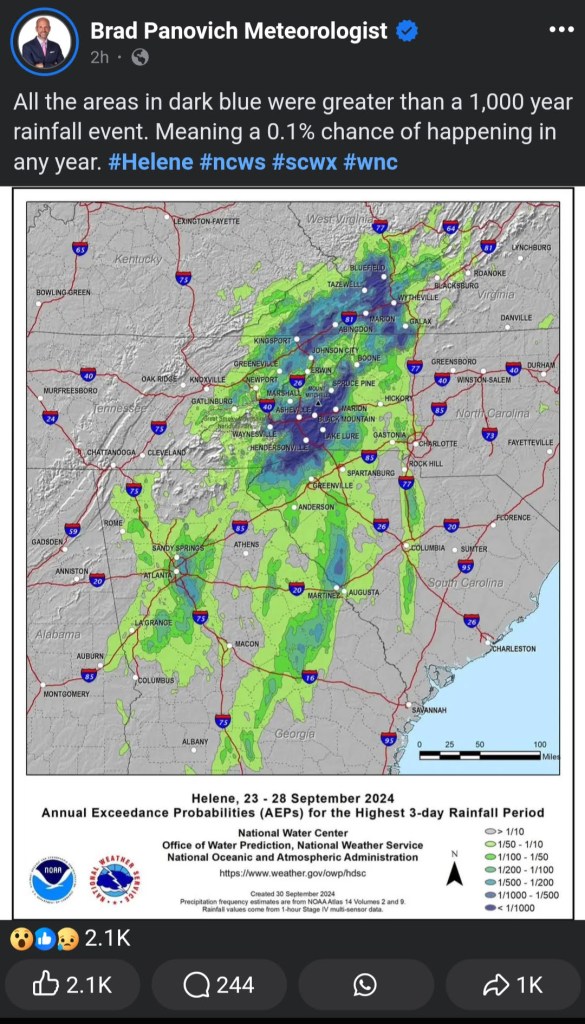
Around this time, a meteorologist I follow on Facebook shared an image of max rainfall totals in the WNC region from Helene. I looked at the image side-by-side with my map. My heart sank. I could see where I had a few outlying pins on the edges of the storm – but there were entire regions of heavy rainfall that weren’t represented with pins. These doughnut holes were probably the hardest hit areas.

This was the best confirmation I could find that my survivorship bias theory was correct. For days, I had been telling people to go to Marshall, Pensacola, Spruce Pine, and north towards the Tennessee border. People asked me why, there weren’t pins there on my map. I would say, look at this pattern – this isn’t a lack of need, it’s a lack of data.

When I saw the rainfall map, I called the navy intelligence guy. I sent him a screenshot, and I heard it in his voice. He saw it, too. I told him, we need to overlay my map with rainfall totals and max wind speeds. Add topography and street views. I told him – look at the map, and find places where you have roadways next to waterways with elevation changes. That’s where the landslides are.

Follow those roads into the hollers and valleys – that’s where the people are. I told Chris, we have the information we need to find these people. We just have to put it together. I told him to follow the Nolichucky and Watauga river basins – go downstream and zoom in on the map. I pointed out specific clusters of roads and communities.

Chris assembled his own group of navy intelligence people, and they came up with a model that I’m assuming went straight to the military. He called it an “intelligence product.”

Around this time, 7-10 days after the storm, search and rescue was transitioning into recovery. The nightly meetings grew to include people with cadaver dogs along with groups with aircraft and machinery. I was also growing a huge network of people in different communities throughout the region as they came online. I connected with people in Boone, Asheville, Spruce Pine, and many other places – some through Reddit, some through Facebook, and some through word of mouth.

The nightly meetings were a surreal mixture of people. Because I was running the meetings, I could invite whoever I wanted, and I worked hard to get community organizers into the room. It is shocking to me how candid people with official agencies were in these meetings. Because of this trust, our network was able to connect with people who had not yet been reached, make deliveries of infant formula and insulin, and mobilize volunteers and heavy machinery to communities around Boone.

I was able to create a space for people in impacted areas to say, “We need this exact kind of help,” and people with the ability to respond heard them and made it happen. And at so many points, the people we needed were the people we found.

I connected with a woman named Allison who has a background in watershed management and lives near the NC-TN border. She made it through the storm, found the map, came to meetings, and because of her guidance and expertise, the military-adjacent people got her connected with the EPA in order to point out potential trouble zones. Allison got a jump start on soil and water testing at a time when it was desperately needed.

A quick note about Allison. She is one of the most powerful people I have ever encountered. Just a total force of nature. She showed up to these meetings and made demands from a place of truth and righteousness. And people listened.

Because of her network, we connected with mapping and GIS experts who helped turn the Google map into a map on ARCgis that let us include more information for responding agencies while protecting people’s sensitive data.

Allison got us in touch with a land conservation director in the Highland area who is connecting local landowners with a program that can put cash in their hands and help prevent people from needing to sell to developers. When propaganda about landgrabs started to circulate, this was crucial information to help quell people’s (extremely valid) fears.

The trauma sets in

I need to pause here. I don’t think I’ve said enough about the absolutely wild faith and blind trust that drove all of us during this time. Everything moved so quickly, I had no idea who I was talking to at many points. I still don’t.

Another important element here is inconsistency. Even though the Google map and our network of people were surprisingly strong, we didn’t have anything close to the full picture. For every report, there were multiple, conflicting reports. Someone heard that a town needed food. Another person saw that FEMA was already there. Nobody knew what to believe, and the confusion was unrelenting.

This is where I developed the next theory: the relief effort had become a last-mile problem. Supplies were making it to centralized locations, but there was no coordinated effort to make sure those supplies were making it into the actual hands of the people who needed them.

To add to this, many of the “last miles” were still inaccessible. Roads to a local church or supermarket may have been cleared, but roads beyond that may still be covered in trees, downed lines, mud, or be washed away. Or, a person may not be able to leave their house due to illness, injury, or fear or leaving their property.

On top of that, one agency might talk to a fire chief who says their community is fine and doesn’t need any supplies or volunteers. But another agency might talk to a preacher who says they have residents who need medical supplies or are still cut off.

I emphasized to people with relief groups and the military that this effort was going to depend on local community-based groups. Fire and police chiefs aren’t going to give accurate information to outsiders. But if we connect with people who run the local Sunday schools and food banks, then we will know who still needs help.

When Helene hit, the storm shattered our physical communications infrastructure, but it also violently tore apart communities, families, and the energetic ties that hold us all together. But for every action, there is an equal and opposite reaction. In the days that followed, it felt like there was a great divine push to reforge those connections. Those connections were built on trust, pulled from wells far deeper than I can access on my own.

I don’t know how we knew we could trust each other, except that there wasn’t any other choice. In the two weeks following the storm, the situation on the ground was changing by the hour. We all just had to trust that we were doing our best with the information we had.

Somewhere around the 10-day mark, I realized that the secondary trauma I was experiencing was becoming a traumatic experience for me. The moment came when I received an email that someone on the map was deceased.

I was able to push through to around 17-20 days after the storm.

For most of those days, I slept four or five hours at night, and then was glued to a chair. My knees hurt from not moving. I was sick from stress and dread. I updated the Google map, answered messages, talked on the phone, and let information flow through me at a rate I hadn’t previously experienced.

The transition

Around the 2-week mark, the association with the military became more defined, but not any more transparent. Mike had been my primary point of contact for the official military, but he was acting as a volunteer and was about to be deployed. James transitioned into the military-volunteer liaison role.

I have a lot of respect for James, but I also think that the military kind of took over my thing and broke it. I’m being somewhat hyperbolic, but I don’t think James really understood that the value of the network I built – that is, accurate, actionable information – came from people in local communities.

As he worked to solidify the network at the top, there was a shift away from maintaining communication with people in local communities. The original Google map was no longer the primary tool, but the community organizers within our network were eager to keep growing. However, James was hesitant to have anything like a website, social media, or even standard boilerplate “This is what we do” language for the volunteer network.

While being a completely unaffiliated group of individuals worked for a period of time, now that the network was solidifying into its own thing, people on the outside were asking questions like, “What is your group? What do you do?” The connection to the NC National Guard was “spoken, not written” so for about a week, the entire situation felt…at odds with itself.

The breakdown

This is the point where I tapped out. I wasn’t holding it together mentally, emotionally, or physically. I tried to tell James that I needed more support and communication, but those things didn’t materialize.

I lost my job over this. I didn’t get fired, but I also didn’t want to quit. The people I worked for are all based out west, and the national news never really captured the enormity of the devastation here. They were tired of me taking PTO days, and I was presented with a situation that felt like, “choose this or that right now.”

So I just quit. The stress and shame from that have been big, and I regret that I didn’t figure out a better path through that situation.

For a while, I thought I could steer the volunteer network I had created into becoming a 501c3, but James wasn’t in agreement with that. So basically, I started a thing, the military decided it was useful, and then the military proceeded to tell me what I could and could not do without actually paying me or procuring the thing.

I spent many days in a devastating state of grief, depression, and anger. I’m still struggling to eat and sleep without nightmares. There is so much loss.

I think about the people represented by those pins every day, and I wonder how they’re doing. I think about the people who emailed me about their friends and family in WNC — some from as far away as Canada. I think about Andrew in Shiloh and all the people on Reddit who used the map to check on people around them. I think about the people who joined our nightly meetings from throughout the region, their voices hoarse from endless phone calls and chain-smoking, and their clothes stained with mud.

I may never meet any of these people, but they’re with me every day.

What comes next

Communities in WNC have a long road ahead. Many families are still living in campers or tents, even as freezing temperatures set in. Many businesses that sustained damage are struggling to reopen. These communities need state and federal assistance, and the current level of aid is simply not enough. Although Helene brought historic levels of damage across a huge swath of the southern U.S., this has been a strangely private event due to the lack of national attention.

My heart aches for the people who perished and for those who lost their homes. It’s not fair that life has to go on after such devastation, and even less so when “getting back to normal” means rebuilding harmful systems and institutions.

There are also many questions that are left unanswered. Where is the accountability for the money that poured in through fundraising efforts? Why was state and federal aid been so fragmented and hard to access? What needs to happen in order to prioritize housing and long-term security?

Despite the confusion and trauma, I keep coming back to the brilliance of human beings. The mountains fell, and people held out their hands to catch each other.

People grabbed chainsaws and shovels to reach each other. They built bridges out of debris. They slogged through mud and hiked over demolished roads to knock on doors and deliver supplies. And they did all of this while enduring their own hardship and grief.

The need is still dire in many places. Not only is there a need for housing, water, food, and physical resources — communities in WNC need to grieve and heal. But like the Google map illustrated, people will find each other, even in the most difficult of circumstances.

The Book Drive That Broke The Library

Book drives are good, in the way that fresh-baked cookies and Norman Rockwell paintings are good. There’s a sense of community spirit that book drives seem to stir in people, and as the freshly elected leader of a new volunteer group in my small desert town, I was looking for an easy project for us to start with.

Good Intentions

I sat at a table with a half dozen or so of my neighbors, and we brainstormed around our vaguely optimistic mission of “making our community better.” Someone suggested that we could organize a book drive for our local library branch, and I latched on to that idea over suggestions of a Valentine’s Day dance or roadside trash clean-ups. Book drives are a low risk, high impact project and basically foolproof! A book drive is always a good idea, I told myself, and I had no reason to doubt it.

To the group, I pitched that a book drive would help our organization build connections in the community and support our severely underfunded library branch. People in attendance largely agreed, although none of them used the library themselves. Undeterred, I listened as volunteers talked about the logistics for a book drive.

One volunteer, Dolly, offered the use of her truck. Brenda offered space in her local business for people to drop off books. I would make a flyer and coordinate with the local library staff. I envisioned that we would collect enough books to fill Dolly’s truck, high-five a librarian, and call it a day.

Five years later, I can honestly say that I had a lot to learn about book drives.

Photo by Pixabay on Pexels.com

Planning for Success

As our group continued to iron out the details, obstacles began to emerge. Janet, a long-time resident of our town asked, “Who is going to pick up the books? That could be a lot of work, and a lot of commitment for people.”

I nodded my head and agreed, “That’s a good point. I don’t want anyone to commit to more than they’re comfortable with. We’ll have space for people to drop off  books at Brenda’s business which should help. I also have time to shuttle books if it’s needed.”

I was struggling to understand Janet’s concern, considering we lived in a small, rural community of 5,000 people. I imagined a best-case scenario with maybe a dozen trips between local drop off points and the library, all of which were within two miles from each other. No big deal.

Drop-off spots for books were thoughtfully chosen, coordinated with local businesses, and clearly displayed on a flyer, which was distributed throughout our small community. The idea was that people would see the flyer, round up their books, and drop them off at a partnering business. I, or another volunteer, would check on these locations once a week or so and transfer books to the library as needed. 

You may know about what happened next, but at the time, I did not.

The Books Start Rolling In

I was unprepared for the deluge of phone calls that came in. I heard from people who had come to own — for reasons often unbeknownst to themselves — mountains of books often in varying states of mildew and disrepair. It seemed like everybody had a reason why they couldn’t just take their books to one of the convenient drop off locations on the flyer. It hadn’t occurred to me that if they could drop their books off somewhere, they probably would have by now.

Boxes full of books accumulated at an alarming rate, filling space in my living room, spare room, car, and kitchen. This is great! This is exactly what we intended to do! We’re helping the library! And kids! These are the things I thought to myself as I carved paths through the boxes to navigate my home.

Our library branch quickly ran out of space to hold the books while library staff sorted through them. In my defense, I had communicated with the librarian, Sarah, during the planning phases of the drive, and they were thrilled that we wanted to collect book donations for them. None of us had any idea we would collect thousands of books. Except, perhaps, for Janet.

Photo by Clem Onojeghuo on Pexels.com

Sorting the Books

Eventually, I learned how to say no to incoming donations. But not before I had collected books by the car load from garages, storage containers, people’s dead relative’s houses, porches, and I think I’ve blocked out a few book-related memories. I imagined that I was a superhero, rescuing books to give them new life. I was supporting the library, dammit, and that’s like supporting knowledge itself. I wondered why more people don’t get involved in their communities.

Now that our volunteer group had collected the book donations, the next step for the library staff was sorting through the boxes. Some books could be cataloged (very few, it turns out were in good enough shape for this). Other books could be sold by the Friends of the Library sale (everything else, mostly). I learned that sales from these books were an important income stream, allowing the library staff to buy items like arts and craft supplies and prizes for children.

The library staff were very excited about this sudden windfall of donations, but they wondered, is there any way the books could stop coming in for a while? And also, it would be great if I could sort them first. Their branch was overwhelmed with donations, and it was becoming a fire hazard.

The boxes of books languished in my house, with one or two boxes a month going to the library. The volunteer group I was leading had moved on to organizing summer movie nights, and I found myself facing an immovable blockade of boxes in every direction. I maintained a militant optimism about the affair, muttering to myself through gritted teeth, I’m glad to have these books. I’m glad to be helping. I’m glad for this opportunity.

Getting Friendly with the Library

About a year after kicking off the book drive, I realized that I was going to have to do something about the situation in my house. By that point, I had become friendly with the local library staff, and had learned that their local Friends of the Library volunteer group was nonexistent. This is what was taking so long for the library to process the donated books; there was no local apparatus to actually accept these donations, sort them, shelve them (on their special “for sale” shelf), collect, and then spend the money. The library staff had been doing this (they weren’t supposed to, so please don’t tell anyone) and depositing the money into the Friends’ bank account.

That meant, in order to process these donations more quickly, the library needed a functioning Friends of the Library. Sarah explained this to me, and even as I listened and nodded my head, I was in total denial about what I was signing myself up for.

The truth is that I never wanted to volunteer at the library. Even if I did, I was still the president of a volunteer group that was going through its own share of dysfunction at the time. Sure, I definitely support the Friends of the Library, but in a hypothetical way rather than an in-person kind of way. Realistically, I didn’t have the time or capacity for any additional commitments. I did not want to be in charge of the Friends of the Library.

That’s what happened, though. I showed up to what Sarah said was an informal meeting of interested volunteers. She was very proud to have assembled these people. The minimum needed for the Friends to operate, she said, and I was honestly impressed. I had been asking my local contacts to find volunteers for the Friends, but had not been able to rustle up any interest, so she had that on me.

The other two meeting attendees were very nice people. One, James, was retired and he wanted to talk about the age of the Earth in Biblical terms. He was voted as the treasurer. The other, Mary, was also retired, and she was more interested in her love life than the meeting agenda. I didn’t blame her, honestly.

The Only Way Out is Through

I was feeling as though I’d swallowed a fly. A book drive had turned into a hoarder-style situation in my house, which resulting in me leading the local Friends of the Library. I was desperate at this point, more than a year since starting this effort, to do whatever it took to get the books out of my life.

I thought that would be a Friends of the Library book sale. Other library branches had sales, so we could, too. We would have tables set up at the library for a week, bags for people to fill, and we would sell a whole lot of books. It would be great.

Mary was very supportive of this idea, although we’d have to plan around her dates. James spent some of the Friends’ donation money on a magazine subscription that I think he meant for the library but had mailed to his house instead, and then mysteriously disappeared before it could be sorted out. I slogged ahead, dogged but determined.

We had the books. We picked a date. I even got paper bags for the book sale donated from the local grocery store manager who was notorious for his stinginess. It felt like a good sign. Mary was going to bring table cloths. What more did we need?

Liability insurance. That’s the answer to that question, and it’s something that we didn’t have. Each Friends of the Library group is associated with one library branch and is an individually incorporated nonprofit organization. This meant that our local group had to hold its own insurance. As I pulled myself through this process, I quickly learned that our local library branch was part of the county system, but our branch’s Friends group was not part of any larger entity. The volunteers stood alone.

Photo by Pixabay on Pexels.com

Tapping Out

I never learned how a group purchases liability insurance when it doesn’t have money in its bank account to afford insurance. I had spent the last month chasing down the Friend’s check book from a previous volunteer who was going through a tough divorce, who had handed it off to another former volunteer, who I also knew, but whose wife wasn’t doing well. I found the check book, the absence of which had become a major hurdle in moving the Friends forward, and I delivered it to the library with the last of my effort and energy. I was done.

The book drive was one of the first projects the volunteer group did, and the books outlasted my time with the group. Even after I had stepped aside from the Friends and the community volunteer group, which was a hard and painful process, I had to deal with books. The remaining twenty or so boxes had managed to make their way into my neighbor’s garage, and while he didn’t care, I needed to be done with them.

What was supposed to be an easy exercise in civic engagement and “being the change” turned into a lesson about local government, community, and myself that I hadn’t set out to learn. As the drive wore on, I found myself feeling increasingly angry; I was angry at all the people who called and wanted me to pick up their books, I was angry at myself for letting the situation escalate, I was angry at the library for being too small and poorly funded. I felt betrayed. I thought I knew something about the world, and if a book drive isn’t what it seems, then what is there left to trust? 

Wrapping up the book drive was as painful as anything I’ve done. The vulnerability I showed with the kind library staff was thankfully received with grace and care. They moved internal mountains to find space to store the remaining books. Sarah proudly told me how the branch’s Friends organization was being merged with a branch fifteen miles away, so now they could have a sale!

I went home and cried. I felt like such a failure. The thousands of books we had collected were finally at their destination, freed from the shackles of their boxes, crates, dust, and darkness. They were going to be read! Or, at least, sold and moved to different basements. The circle of life. It was very hard to feel relief at the end.

It Wasn’t Over Yet

Strangely, I had the chance to follow up with the book drive several years later when I was hired as a library aide at that same local library branch. Part of my training included a day spent in the county’s library headquarters, and I was utterly mortified when a staff member showed a huge section of floor with suspiciously familiar boxes of boxes. She explained that most county library branches no longer accepted donations as they had been backed up in that department for years. I tried very hard to not meet the eyes of the two workers who stood over tables, unboxing and flipping through pages of old books. 

The library staff member explained that most book donations were basically useless, with most of them going to the dumpster. She shared some horror stories with our trainee group about books full of bugs or mold to underscore her point, and we moved on with the tour.

It was odd to hear the library administration speak so disparagingly about book donations. I can see the frustration with going through piles of battered and bruised books, but for our cash-strapped library branches, those books represent a much needed source of income when they’re sold on the Friends of the Library shelves. I understand that it takes time and resources to sort through the donations, but surely there’s got to be some benefit?

What I thought had been my own personal failure with the book drive was actually a series of failures, many of them outside of myself.

Photo by Nothing Ahead on Pexels.com

Seeing the Systems

Mojave is largely defined by scarcity. For many of my neighbors, there’s not enough food, water, housing, or safety. Our schools lack basic supplies, and in our library branches, many of the shelves are empty. Living in a desert doesn’t help to ease the ever present sense of not enough.

The people who opened their homes and bookshelves to me were not under the impression they were donating garbage to the library. They held onto these books in their homes and basements because they thought they were important; they saw their old books as a resource, and the book drive was a way for them to give back to their community, even if they were going to be in a food bank line themselves later that day.

The people giving me their books would often go through them with me; brushing the dust off the covers as they told me the story of how that book came to be theirs. When they turned those books over to me, they really believed they were helping in a meaningful way. I did, too. 

The hands that received these books did not cradle them with such care. Often, donations were held by fingertips at arm’s length while staff at the county’s library headquarters scoffed at the poor condition. I do see their point; mildewy home repair books from the 1980’s really aren’t that useful to a library that is trying to maintain a current and relevant collection.

But still, the disconnect troubles me. The library is a unique institution, one that is fundamental to our basic ideas about community and democracy. A community depends on the services and resources that flow outward from its library, and the library depends on the people that flow into it. How can this flow happen when the same books are seen from one side as an important resource that should be shared, and from the other, a pile of trash that needs to go to the dumpster?

Putting those books in the dumpster makes sense, if the end goal is to improve profit margins and reduce waste. Donations are expensive to process, and empty shelves cost less to maintain than shelves full of old, dusty books. Is that the best way to run a library, though?

People here didn’t have nice, new books to donate or much money to contribute. They didn’t have the time or interest to sit in meetings for the Friends of the Library and talk about liability insurance. They just wanted to give what they had to enrich a community space.

The problem isn’t in the community’s moth-eaten offerings, or even the library staff’s understandable resistance. The problem is how we fit communities and institutions to each other, and why. If the most important thing is profitability, we’ll make certain choices (like throwing away donations and having empty library shelves), but if the most important thing is connecting people with resources and a shared community space, then maybe things would look a little differently. I wonder how much more we could have done if the library had the structure, systems, and resources to meet the community where we were at, boxes of old books and all?

More Books, Fewer Drives

With the book drive, our volunteer group tried to do the right thing. What we did however, was take resources that were already existing throughout the community and give them to an institution that effectively throttled the mobility and reach of those resources.

Book drives have a much different meaning for me these days. If I had the chance to do it again, I might skip the library entirely and instead partner with a wider array of community members to seed the area with books. We could place books in laundromats, barber shops and salons, and every waiting room in the area. Anyone who wanted one could have a free little library exchange box in their yard. Instead of funneling books from lots of places into just one place, why not redistribute them to even more locations? 

With a half dozen volunteers, our group inspired a community to move an avalanche of books to support our library. It was an extraordinary effort that almost broke our library system and did break a few things inside myself. Even still, I can’t help but to be awed by people and what we can accomplish. I wonder what will happen when we realize that we have this power, right now, to be the solutions to even our most pressing problems. We are our most tremendous resource, and when we realize that, I don’t think anything will be able to stop us.

We Don’t Need Tips For Reducing Stress

Since it’s a new year, it’s time for another round of resolutions, goals, and tips for better living. NPR joined the trend the other day with a Morning Edition segment that featured Dr. Aditi Nerurkar to talk about her new book about stress, The 5 Resets. Throughout the interview, the doctor shared steps that listeners could take to manage their daily stress levels.

But These Tips For Stress Aren’t New

The doctor suggested regular breaks during the day, limiting screen time, being mindful, and practicing breathing exercises. These are all fine ideas, but nothing new. The list resembled most other lists of stress-management techniques that have been published in the last decade.

Although it was a perfectly reasonable list, it really struck a nerve.

Why do we hear the same instructions year after year to take more breaks and deep breaths? How did the high levels of stress we experience in our daily lives become normalized? And why is the solution always on the individual to advocate for breaks and practice breathing, rather than changing the systems causing this harmful stress load that necessitates annual lists for its management?

This book’s audience – average American adults – experience large amounts of stress from societal demands, such as the need to work for most of our waking hours to pay for housing, food, and other necessities. Despite some favorable economic indicators, plenty of people are struggling with the rising costs of housing, childcare, and most everything else. For someone working overtime at their full-time job to catch up on bills, a breathing exercise is like a band-aid for a bullet wound.

Seeking Systemic Changes to Reduce Stress

For a greater impact, this doctor could use her position of relative power to lobby her representatives for changes that would reduce stress on a larger scale. This could include advocating for a shorter working week, a higher minimum wage, and mandatory paid breaks.

She could provide her patients with notes for their employers. Since many employers require a doctor’s note after two consecutive sick days, how can doctors make it as easy as possible to provide those? Doctors could also provide notes for reasonable accommodations like seats for cashiers in an attempt to provide better working conditions. Perhaps doctors could advocate amongst their peers to normalize these practices.

Instead, we get another book with mindfulness and breathing exercises that places the responsibility for managing stress squarely on the people who are already struggling. I don’t want to sound ungrateful (practicing gratitude was another of the doctor’s recommendations), but I think I’ve had enough stress-management tips for the year. Now I’m ready for the stress itself to actually be reduced.

Pathological Demand Avoidance: Christmas Edition

I mostly enjoy being autistic. I appreciate the quirks in how I perceive the world, even though I often feel out of step with the people around me, and moreso during the Christmas season.

There is one aspect of my autistic experience that I could do without and that’s Pathological Demand Avoidance. Also known as Persistent Desire for Autonomy, PDA isn’t something that every autistic or neurodiverse person has. Like everything else, it exists on a spectrum and some autistic people may have more or fewer symptoms of PDA depending on the day or situation.

PDA is described as a set of personality traits that lead someone to generally refuse to cooperate with other people’s requests. This description is a gross simplification, because for many people with PDA, it’s not that there’s pleasure in simply refusing to comply. There can be overwhelming feelings of panic, anxiety and frustration at feeling like we’re not in control of our choices or what’s happening to us.

I am capable of following rules, sometimes without any internal strife. If I understand why a rule is in place and agree with its reasoning, then I will follow it for as long as I need to. As soon as I start to see that a rule isn’t in line with its stated purpose however, I’ll become defiant and obstinate because why should I do something that doesn’t make sense to me?

My PDA isn’t just triggered by rules; expectations in general, such as schedules or socal conventions are also minefields.

Of these, Christmas is among the worst. The five week period between Thanksgiving and Christmas represents so many demands, it can be truly miserable.

First and foremost is the demand to be happy. It’s the hap-happiest season of all, right? Everyone should be merry, jolly and bright. But what if I don’t want to be happy? The pressure to perform happiness and cheer is high, and frankly, I’d like to decide my mood for myself.

Next are the demands for communication. There are Christmas cards to write, phone calls to make, lists to share and receive, and parties to attend. It’s exhausting, and I feel a constant level of anxiety about whether I’m doing any of it right.

There are also material demands. I have to go shopping (one of my least favorite things) and make choices about what to get for people. Is this item something that my brother or mother-in-law or whoever will like? Do they need it? Is it an appropriate amount of money to spend? Have I gotten too many gifts, or not enough? What do I want for Christmas? Is it appropriate to ask for?

Each of these choices presents its own set of demands, and it’s genuinely distressing to feel like I don’t get to deal with these demands on my own timeline. Decisions have to be made, whether I like it or not.

It’s exhausting, and I cry frequently during the holidays out of sheer frustration.

The worst part though, is I hate feeling this way. There’s a part of me that really wants to soften into the cheer of the holidays. I want to feel the excitement and joy that everyone around me is feeling. But then, I have the internal conflict over whether or not I actually want to be happy or if I’m feeling peer pressure to be happy. Does it make a difference? Unfortunately, yes it does.

At best, I’m able to hold all these feelings together: anxiety and frustration at all the demands and expectations, along with happiness at seeing family and being part of the celebration, and a large dose of compassion for myself for the struggle it all is.

To my fellow demand-averse neurodivergents, I hope you have the best possible holiday. May your demands be manageable and your happiness be of your own choosing.

Camp Meetings and Community

One of the first things I did when we arrived in North Carolina was attend a Friday night camp meeting. I remember some of this state’s idiosyncrasies from when I lived here during my teenage years, like Cheerwine and liver mush, but I had never heard of camp meetings.

A bit of googling led me down a rabbit hole of local history. Starting around the end of the eighteenth century, camp meetings were a multi-week event where different church congregations came together to live, attend services and socialize together. The “camps” often consist of a central square surrounded by semi-permanent structures for people to live in called “tents.” A hundred years ago, tents were made out of branches and tarp, but today, tents resemble very basic one or two bedroom townhomes, complete with porches and swings.

Walking around a camp meeting feels less like a religious revival and more like a wholesome version of Bourbon St. The camp meeting we attended had well established tents, enough to make two perimeters around the central pavilion. Older folks sat on benches and in swings while teenagers and families filled up the streets. 

“Walking around” is a central activity of camp meeting, and it involves lots of waving, chatting and flirting for the teens. The air was filled with laughter, talking, and the smells of pies and cookies baking in tents. People were happy, excited to see each other, and the kids were clearly thrilled to run around in the summer night with their friends.

The evening we attended was a music recital for a local music school. We heard all manner of stringed instruments being plucked and strummed through renditions of gospel standards. The audience filled in with hand claps when the younger performers lost track of the rhythm. Afterwards, we walked to the “shack” and got ice cream to eat while we walked around. 

This particular camp meeting is one of the oldest in the state, and the tents are a source of pride for the families who own them. Often in the same family for generations, tents are considered something of a second home, even though they’re only occupied for a couple of weeks out of the year.

Community was a big part of the draw that convinced my husband and I to move from California to North Carolina. We didn’t realize how isolated we would feel on the west coast. Not only was it difficult to stay in touch with family back east, it was difficult to find friends or activities when we lived in such a remote area.

Here, we are closer to family and friends. We are also closer to the ongoing project we’ve been involved with to build an intentional community in southern Virginia. I affectionately refer to this as our hippie commune group.

This group has been going through a rough phase of growth, and we’ve tabled recent business in order to focus on a process of conflict resolution/transformative justice. It hasn’t been easy, and we’ve struggled to maintain traction due to being a relatively small group of busy people. For the past several months, we haven’t really gotten much done except to annoy each other.

Despite all of that, we’re still a group of people committed to each other, a piece of land that we bought and a set of shared goals. 

But are we a community?

The other day, one person in our group was chatting with a friend of his who is well versed in Intentional Communities. She advised him that we shouldn’t call ourselves a community. Instead, we should call ourselves a project. 

When my hippie commune friend shared this insight with me, I bristled. This strikes me as an odd gate to try and keep closed, especially coming from someone who has worked within spaces where communities are made.

I think of our group as a community. We’ve been meeting and talking regularly for over a year, and we’ve been learning about and from each other the whole time. I think of these people as friends. We don’t live in the same place, but is that a prerequisite to be considered a community?

At camp meetings, attendees only live there for one to two weeks a year, and many more people attend than have space to sleep. At some points in history, camp meetings had thousands of attendees on Friday and Saturday nights, and many of them went to their own homes at the end. Were they less a part of that community?

To me, a community can be defined not only by physical proximity, but also shared interests, values, history and goals. Communities can exist entirely online, or in monthly get-togethers to play board games, or in yearly trips to see friends. I’ve seen communities spring up among smokers outside a wedding and drunk women in bathrooms. More than anything, though, I think communities are defined by commitment. 

The camp meeting I attended lost around half of its tents to a fire in 1956 and again in 2019. After both events, the churches and families that were a part of the campground rebuilt. People showed up to do the work, and the campground continues today.

Our hippie commune group isn’t dealing with a fire, but we are navigating a situation that requires some rebuilding. Not of physical structures, because we don’t have those yet, but rebuilding of relationships, trust, and systems. On the whole, we are showing up for this work as best we can, given constraints of time, jobs, and family.

This work isn’t particularly fun, either. It’s a lot of listening and making space for hurt feelings. I think it’s remarkable that we’re getting through this process when any of us could reasonably bow out.

That’s commitment, and to me, that’s community. I don’t think I accept definitions of community that are limited to physical proximity. I think we all need more community, not less. I’m looking for a definition of community that acknowledges the many different ways that people choose to exist together, whether they’re near or far apart.

Millennial and House Hunting , Part 1: Accepting Reality

I never really expected that I’d buy a house. As a millennial in my mid-thirties, the economy has been in a series of sharp upswings and downswings since I was a teenager. The attacks on 9/11 changed everything seemingly overnight; in high school, I watched as friends’ parents were laid off from their manufacturing jobs; and not too long after I graduated, the 2008 crisis in sub-prime mortgage lending led to people losing their homes along with everything else. 

Even without the economic uncertainty that has defined much of my generation’s adulthood, the process of home buying has always seemed opaque and unknowable. What exactly is a mortgage? How do people get them? As a soon-to-be first-time home buyer, I am as mystified as I am skeptical.

Aside from my executive dysfunction around banking and legal documents, I also find the entire concept of owning property to be strange and somewhat distasteful. This planet and its resources that sustain us are living things. Water flows, fire consumes, air moves and trees grow, die and become the dirt again. How is it possible to own a life cycle outside of the one we are born into?

The concept of property ownership becomes more absurd to me when considering questions like, how far down into the earth or up into sky do a person’s rights of ownership extend? Does someone own the view from their property? 

I admit that I would be angry if I bought property with a view only to have another home or development built in my line of sight. But I also recognize that this is ridiculous, and I would prefer to avoid this situation altogether by not putting myself in a position where I may feel entitled to own what I can gaze upon. 

And yet, my husband and I are taking the steps to buy a house.

It’s been a torturous process, full of made-up concepts like “credit scores” and “escrow.” Ryan and I are not making this decision lightly. In fact, we have explored all kinds of alternatives to home buying, including living in a bus or on a boat. If we have to chain ourselves to a mountain of debt, why not make it one that can also sail off into the sunset? 

At this point, we’re not looking to buy a house because it’s a thing we really want to do. The landscape for renting has become appallingly expensive, and if I’m going to spend upwards of $2,000 a month on a place to live, I’d rather not have to deal with a landlord on top of it. 

The cost of housing is increasing at an alarming rate, and while home prices are stabilizing in some markets, rent prices aren’t necessarily following suit. As a renter, the roof over my head is getting expensive at a faster rate than the quality of those roofs is improving. We’re looking into buying because given the options, it seems like the least painful way to meet our basic need for shelter.

In our previous community of Mojave, we decided not to buy property because real estate prices were already climbing in 2014-2015. At that point, people called it a bubble, even though we weren’t even a decade from the previous housing crisis. 

That bubble in Mojave never burst though, and property values continued to climb in our years there, even as we watched houses (including the ones we rented) crumble into the desert. By the time we moved away from California, a two bedroom home in Mojave was around $200,000. These prices are extremely low for California, but the trade off is property that’s 30-40 miles from the nearest city in an area with non-existent or failing infrastructure, with a home that almost certainly needs extensive renovations beyond the fresh coat of paint the most recent realtor has applied.

I rarely saw families moving into these homes, although the signs for the realtors outside them would change. Meanwhile, these homes sat vacant while a growing population of unhoused individuals set up camps in alleys and side streets.

Now, we’re in North Carolina, one of the fastest growing markets for home buying in the nation. Compared to California, this state has relatively higher levels of infrastructure, available water, and access to towns and cities that will make buying a house here hopefully feel less like pissing into the wind.

I’m not completely thrilled about it, though, and I am still working to accept that this is the choice we’re deciding to make. We’ve weighed the pros and cons, and this is where we’ve landed. But I don’t know yet how to reconcile my objections to property ownership with the reality that participating in this expensive, stressful and often nonsensical process is currently our best option to have a place to live.

Out West & Back Again: A Moving Tale

Just over a week ago, I was waking up in Mojave, California. Today, I woke up in Catawba, North Carolina. As far as reality-shaking life events go, a road trip to move across the country ranks pretty high on the list. 

My husband, Ryan, and I had been mentally and emotionally preparing to leave California and our home for the past nine years, but there’s only so much a person can do to manage the endless to-do lists, packing, and waves of sadness and second-guessing that are inherent to this process.

After considering the options for moving our belongings as well as Ryan’s 16 foot enclosed trailer, we settled on the least expensive (relatively speaking) but most labor-intensive option: I would drive the Honda with our two year old cat, Steve, and Ryan would drive a 20 foot U-Haul and tow his trailer. At the last minute, we decided to bring a stray kitten with us who also rode in the moving truck with Ryan.

We didn’t quite retrace our steps when we moved to California nine years ago from Atlanta, Georgia. For that trip, we drove to Indiana first and stayed with Ryan’s family for a night of two, then south to catch I-40 in Oklahoma.

One of our cars broke down in Moriarty, New Mexico and we also spent two nights there. While that trip was an adventure, it wasn’t quite the same epic cross country travel experience that driving over 2,300 miles – almost the entire length of I-40 – in five days turned out to be.

Moving across the country with all of your worldly possessions and two cats in tow is a serious undertaking. We prepped for weeks. Ryan put new tires on the trailer and carefully strapped down his shop workspace inside while I obsessively researched miles between cities and cat friendly hotels.

When we left Mojave, we were as prepared as we felt like we could be. We had spent the last few days feverishly packing since our 500 sq ft apartment didn’t have room to both pack boxes and live there. The U-Haul needed to be returned in nine days, which meant four days to pack and five days to drive. Our belongings got wrapped, boxed, and somewhat unceremoniously tossed into the moving truck.

I should mention at this point that Ryan had never driven with a trailer. We purchased the trailer when he had to move out of the previous shop space he was renting. Tired of having to uproot his personal workspace, he decided to buy a 16” x 8” enclosed car hauler. Inside are shelves, work benches, tool boxes, boxes of books, and other stuff like that. It all got strapped down, including a 1972 CB 400 four (that’s what Ryan calls it) motorcycle. It held together fine when we went for a test drive with the U-Haul.

The next five days would test everything: nerves; physical endurance; driving and navigation capabilities; relationships; and the U-Haul’s towing capacity. What follows is the day by day breakdown of our journey and a few other things.

Day 1: Mojave to Flagstaff (420 miles)

On our last morning in Mojave, we packed the last of our items into the U-Haul and sprinted through some last minute errands. We snapped one last selfie in front of our apartment in the desert, and at 11:30am, we were turning on our walkie talkies and pulling onto the road.

Leaving Mojave, the sun was high above us as we went east towards Barstow to pick up the western end of I-40. We drove through Kelbaker, Needles and the Mojave National Preserve. I said goodbye to the desert and the Joshua Trees as we wound our way through the mountains and high valleys.

We followed I-40 east, alongside the railroad and historic Route 66. Exits are sparse here, and the ones that exist take you to the historic road. The few gas stations are typically backed up with people getting gas, stretching, or browsing the Route 66 memorabilia inside.

Traveling through the desert is harrowing. There are vast stretches of road without any visible life, aside from the creosote bushes, occasional trains, and passing cars. My phone cheerfully let me know each time it lost GPS signal, and that happened frequently. 

As we drove into Arizona, the roads degraded noticeably. There were so many potholes and intense inclines, it felt like California was trying to pull us back down into it. As we crawled over the chewed up roads, I mentally rehearsed how to change a tire. I didn’t know when we left that the first day’s drive would take us to the highest elevation on the entirety of I-40 at just over 7,200 feet.

I watched the semi trucks in front of me bounce (because the fully loaded U-Haul and trailer behind me couldn’t go over 65 mph or so) and tried not to think too much about the load that Ryan was hauling.

As we continued to climb to Flagstaff late in the evening. I noticed Ryan was slowing down more than he had been on the steep climbs. Shortly thereafter, he came in on the walkie talkie and said he needed to find a gas station. 

Thankfully, gas stations were slightly more plentiful as we approached the city and when we pulled over, Ryan checked the oil on the U-Haul. I was holding my phone as a flashlight, trying not to shake it too much while I shivered in the cold air, and the two of us inspected the dipstick. It was dry. 

Ryan poured in a quart of oil, which somehow brought the level on the dipstick to overfull. It was a mystery that was not going to be solved at 9:30pm on the side of a mountain. Thank goodness for that $7 U-Haul roadside assistance.

We made it the rest of the way to Flagstaff, to the Comfort Inn we had booked a room with at an earlier gas stop. 

By the time we got to the parking lot, my nervous system was shot. I was exhausted, worried about the cats, worried about Ryan, and starting to understand the deep stupidity and hubris that made this drive seem like a good idea.

I stood in the parking lot, crying and unpacking the car while Ryan checked in. Several minutes later, he walked back, shaking his head.

“They said we can’t stay here with cats.”

I needed a room. I needed to cry. I needed to eat. I was beyond my ability to reasonably communicate.

“WHAT THE FUCK? We CALLED and ASKED on the PHONE and they said it was FINE.”

Ryan adopted the posture of a person negotiating with a very angry zoo animal. Hands up, he backed away slightly. He tried to counter my shrieking with calmness as he explained that the guy behind the desk tried to call and tell him.

“He tried to CALL? There’s NO GODDAMN SIGNAL FOR MILES, what the FUCK is this guy’s PROBLEM?”

“He said one time they had a cat that…”

“I DO NOT GIVE A FUCK”

‘I know…”

“LET ME TALK TO HIM”

“That’s not a good idea”

I pointed to a hotel next door, “THEN PLEASE GO GET A ROOM OR I WILL.”

Ryan walked off without another word, and came back holding the room keys up so I could see them from a distance.

Finally in a room, I collapsed and sobbed on the bed while Steve cried and the kitten ate dinner. Ryan brought back food for us, and we got to sleep around midnight. 

At 3am, Steve woke me up crying. He was not happy, and he needed me to know it. I started crying because I didn’t know what to do. I woke Ryan up who listened to us both cry, then shoved Steve in his carrier and put him in the car with the windows cracked. I cried more and we slept for another couple of hours.

Day 2: Flagstaff to Amarillo (600 miles)

The second day took us through the remainder of Arizona, all of New Mexico, and into the Texas panhandle. 

I-40 passes just south of the Navajo Nation, the largest reservation in the country, through some truly spectacular landscapes. Mesas jut upwards from the desert floor as you weave through less intense elevation changes. In the valleys,you can see the trains from miles away as they arrive and disappear over the horizon.

As we drove, I noticed that Arizona and New Mexico looked shockingly green. There was grass covering much of the desert floor, and the bushes all seemed vibrant. In my memory from when we moved to the west, I remember these states as beautiful, but largely brown, barren desert.

I wondered if it only looked brown to me on that trip because we were leaving Atlanta, a comparatively lush and green place, or if it looked greener now because we were leaving Mojave. Do we ever see things for how they truly are? Or are we bound to understand the world around us compared to what we’ve already seen?

The roads through New Mexico were in pretty good shape until we got to Albuquerque. We drove through the city in rush hour traffic, through some tight construction spots that made me sweat when I checked Ryan’s trailer in my rearview mirror. There was a stretch of road that was so rough, I almost bit my own tongue as I got shaken around in the Honda.

We kept driving eastward, through more rolling desert with scattered bushes and cacti. The sun was setting as we crossed the state line into Texas. The roads were mercifully smoother, and the gas stations were more plentiful and easier to navigate with the U-Haul and trailer. 

It was unfortunate then, to realize at this point just how poor my nighttime vision is. In Mojave, I didn’t drive at night, and I was fine with that. As the darkness settled around us, I leaned forward into the wheel and squinted to make sense of the road in front of me.

It was getting late, and Ryan needed one more fuel stop for the night. I tried to check my phone for upcoming gas stations, but I was down to 5% battery. 

Of all the complaints I could make about Texas, this one is trivial, but needs said: their exits are not well marked. In the distance, I saw a tall, illuminated sign for a Pilot truck stop. A short while later I saw signs for an exit and thought that had to be the exit for the gas station.

I pulled us off the exit ramp to discover that I was wrong. The ramp was extremely short and went exactly nowhere. I think Ryan may have locked the trailer brakes a bit to not hit me.

In front of me was a road that may have been paved at one point, but was now mostly potholes held together loosely by gravel. Not ideal.

I eased us onto this road, praying for an entrance ramp back to the interstate. What I found instead was a sign saying a cemetery was to the left and a turn that looked like if we took it, we could end up the wrong way on the interstate. 

I stopped the car and grabbed the walkie talkie.

“What the hell do I do?”

“Are we going to take that ramp?”

“The one that says cemetery? And looks like it goes the wrong way? I don’t know, maybe this road keeps going?”

Ryan could hear me starting to panic. He looked at the cemetery ramp and said, “Ok, the yellow line goes on the left and white line goes on the right. That ramp will get us back to the interstate.”

Bless the person who taught him that rule because we were not wrong way drivers that night.

We got gas and even though it was late, the person at the pump next to me struck up a friendly chat. Back on the road, I grabbed my walkie talkie to tell Ryan that we were getting back to the land of small talk with strangers.

We drove into Amarillo. There were more incredibly tight construction squeezes, more lane shifts, and one very spooky person standing on the interstate, between left lane traffic and the concrete barrier.

We made it to the city and settled in at a Motel 6, and their front desk attendant was pleased as punch to have us and our two cats. Whoever decided to shift the Motel 6 marketing away from “cheap and dingy but consistent” to “bring your pets, we don’t care,” is a genius.

Day 3: Amarillo to Little Rock (600 miles)

We checked the trailer that morning before we left. Maybe we shouldn’t have. When Ryan opened the side door, I could hear the sound of heavy objects falling and breaking. 

I walked around the trailer to find him heartbroken, standing over the broken remains of an antique glass exit sign from his college he had hung in his shop. I peered around the door to see an absolute avalanche of upside down boxes, books, papers, and tools.

The most important items were still in place: the motorcycle was upright and strapped down, his 3D printer and computer were somehow still on their shelf. One of the other main shelving units had wrenched itself away from the wall, probably in Albuquerque, tearing its anchor hooks right out. Another shelving unit had failed completely with shorn and twisted metal. It’s a good thing we have our tetanus shots.

We had to pull stuff out of the trailer and into the U-Haul to close the door. Sweating, running late, and more stressed than we’d been, we set off towards Little Rock.

Thankfully, the roads in Texas continued to feel smooth like butter. The landscape was starting to transition from more desert-like to more plains-like, and I started to see actual trees dotting the landscape as we approached Oklahoma.

We had more radio stations to choose from, but they were mostly country, western or Christian stations. I was struggling with fatigue, which was unfortunate since we were only a couple of hours into the drive. I found a conservative talk radio podcast and found that to be surprisingly engaging. Although, it was bizarre to hear two Republicans from New York and New Jersey talk about the Los Angeles mayoral election.

We crossed the Oklahoma state line and I stopped at the welcome center where they had free and absolutely life changing coffee. Back on the interstate to catch up with Ryan (who didn’t stop), I discovered that Oklahoma drivers go fast. With speed limits of 75 mph and the best roads along I-40, it’s hard not to.

We continued through the state without too much issue besides increasing boredom and body pain. We were passing through Oklahoma City around lunch time and about two miles from our next exit when we encountered the worst driver in Oklahoma.

Up to this point, the entrance ramps had been long and extremely visible. In the city, we came up on an entrance ramp that was a short U-shape and there was a car sling-shotting around to enter.

We were in the right lane, and I checked my mirror to get left. A silver SUV was just behind me, no time to change lanes. I stepped on the gas to let the incoming red sedan zipper between me and Ryan, but the red sedan sped up too. 

I let off the gas to slow down, and in that moment, the silver SUV didn’t pass me, they got between me and Ryan and hit their brakes.

Now, the red sedan was boxed in on my right, and Ryan was breaking hard. The trailer brakes locked but Ryan kept control and took the U-Haul into the entrance ramp as the silver SUV served back to my left. For a moment, I was axle to axle with the red sedan and silver SUV. I have no concept of what lane any of us were in, but it was tight. 

The silver SUV and red sedan both got the hell out of the way and Ryan got back on the interstate behind me. I do not know how we all drove away from that, except for Ryan’s excellent response time and judgement. Certainly no thanks to the jerk in the silver SUV.

We stopped for gas and to breathe. We still had several hours of driving ahead of us.

The rest of the drive that day would be lost to a haze of anxiety and adrenaline, if it weren’t for a gas station in Arkansas where I learned my new favorite pick up line.

I was wearing my usual go-to outfit of leggings and a tank top, and I noticed a woman checking me out in the gas station as I looked for the bathroom. I was honestly concerned that I was going to get a comment about being inappropriately dressed or something (considering I haven’t worn a bra since 2019).

I was turning a corner, and I heard from behind me, “Those pants lie.”

Confused, I turned around. She said, “I got a pair of those leggings, but my ass doesn’t look anything like yours.”

I started laughing, told her she would be fabulous in these leggings, and had a lovely and highly unexpected chat. I am grateful to that woman for completely upending my expectations.

I barely remember getting into Little Rock, except that I took a wrong turn and pulled us into a tiny little parking lot that mercifully had another exit. We got to the Motel 6 in North Little Rock and Ryan went to check us in.

“I got us a room. You won’t believe it, there’s a guy in the lobby propositioning a sex worker.”

“You know, I absolutely do believe that.”

“I heard her say she had her own protection and she patted a gun holster in her bra.”

“That sounds smart. What room are we in?”

We entered the room to a thick and sticky smell of cigarette smoke. Every surface had cigarette burns, despite the available ashtrays. I could feel my head swimming. It was 10:00pm.

“I don’t think this is gonna work.”

Ryan took this with remarkable pluck, and immediately went and got us another room, this time non smoking.

The new room however, was next door to the gentleman who was still negotiating with the sex worker. We tried to enter quickly, and I saw that the door to our room had clearly been kicked in at one point, with wood splintering from the jamb. I was still feeling that natural high that comes from avoiding an interstate collision. This would work.

We sat in the parking lot and confirmed for each other that yes, that was a messed up day of driving, and yes, we were lucky to be alive. 

We ate Waffle House waffles in the hotel bed, and I fell asleep laughing.

Day 4: Little Rock to Knoxville (530 miles)

It was raining when we left Little Rock and kept raining pretty much until the Tennessee state line.

I-40 is the only east-west interstate corridor in Tennessee, and Tennessee is the longest state along the whole of I-40. Called “Tennessee’s Main Street” it goes through Memphis, Nashville and Knoxville, weaving through mountains, wetlands, and rolling hills.

If you want to experience I-40 but only have one day, drive through Tennessee. The elevation changes are less intense than out west, but the twists, turns, and traffic make up for it.

Up to this point in our trip, traffic would die down between big cities, but not in Tennessee. Entrance and exit ramps became shorter and much sharper. Gas stations were smaller.

Getting into the state was tedious and we had more stops than we wanted. Ryan jackknifed the trailer at one gas station that called itself a truck stop but obviously was not. He was concerned about hitting a parked car, cut it too tight, and clipped the trailer into the back bumper.

He got the trailer un-jackknifed and a kind person in the lot let him know he had space to leave.

A mile down the road, my walkie talkie died. Another stop. Another small, shitty gas station. 

Back on the road. More traffic, more construction, more aching muscles.

We needed to eat, so I thought aid use one of those “parking areas” on the interstate and make sandwiches. They’re for semis, but the ones in  Texas were like rest areas without bathrooms, paved and easy to access.

Tennessee could take a lesson here. I pulled into a parking area onto a ridiculously short exit ramp to a cramped gravel area with a semi backing up directly where I was needing to go. 

The way through this parking area was ridiculously tight, and there was a truck driver standing and yelling up at another driver. Not a great sign.

Back on the interstate, hungry and tired.

Somewhere between Nashville and Knoxville, around 4pm, we finally found a Love’s truck stop with the best damn Arby’s I’ve ever eaten.

Back on the road, a 2-3 hour drive turned into 4-5 hours with traffic.

Exhausted, we pulled into a Motel 6 and I looked at the full parking lot with some alarm. Indeed, there was no vacancy. 

We called other hotels. One was charging over $200 a night, even though we weren’t buying the room, just staying there for the evening. Others wouldn’t take cats, which is laughable considering that hotel rooms are routinely torn apart by human beings, and they still get to book rooms.

We found a room down the road. Google decided to navigate us through a series of parking lots that frankly had more curbs than necessary. Knoxville parking lots are also full of craterous potholes, their depth disguised by the puddles from the rain.

We were so close to a room when Ryan stopped the U-Haul. He wouldn’t fit under the entrance facade at the hotel. He couldn’t go the other way. He was gonna have to back the trailer up.

In the parking lot, guiding Ryan back so he didn’t hit anything, I put my hands on my knees and almost lost the contents of my stomach. 

I spent the evening coming up with my list of complaints for Google. Foremost on my list, why is it so hard to find an actual truck stop when searching on Google Maps?

Day 5: Knoxville to Catawba (220 miles)

Over coffee, Ryan and I caught up about the driving. He had the kitten with him, who had spent most of the miles curled up in Ryan’s lap. I’m grateful for the amount of company and calm that the kitten provided, considering the rest of Ryan’s driving experience.

Somewhere in Tennessee, the U-Haul rolled over to 130,000 miles, and the steering was just as loose as you might expect. Which is to say, it was very loose. As he described driving the U-Haul, and all of its various sounds and shudders, he started laughing. “I am absolutely thrashing that truck across the country.”

We left Knoxville, and I barely felt the pain in my back and neck as we started the last leg of our trip.

We had some more intense twists and turns, but mostly downhill through the Pisgah National Forest into North Carolina. This traffic was also quite dense, and I was sandwiched between Ryan and the U-Haul behind me, and a Frito Lay semi truck as we wound our way down the mountains. 

We made it into North Carolina, and about twenty miles west of Asheville, we had our last fuel stop. I was going to suggest we get a biscuit for breakfast at the Country Kitchen next to the Travel Center when I saw Ryan shaking his head.

“I locked the keys in the U-Haul.”

“Say that one more time, please.”

I couldn’t even be mad. I’ve locked myself out of so many cars, I made sure to carry my own extra set of keys for the trip, but the U-Haul wasn’t so well equipped.

The kitten was in the uhaul though, and the windows were up. It wasn’t a sunny day, but I was still worried, and not to mention, we were so close to home. We had just driven through a solid hour of mostly stopped traffic, and I assumed any locksmith would have to drive through the same.

Ryan was trying to apologize, and was sounding pretty frazzled. I handed him my phone to Google something, since he locked his in the truck.

I walked around to the truck driver entrance and proceeded to ask everyone in the vicinity if they had a slim Jim or any way to open a locked at door. 

Within a few minutes, I met Joe, who followed me to the U-Haul and proceeded to vigorously jam things down the window. He didn’t have any specific tool he was using, so I kept asking.

I rustled up a couple of wire cost hangers from the truck repair shop behind the gas station, and brought these to Joe. I found another truck driver who took one hanger and one door while Joe worked the other.

I eyed the bricks that lined the landscaping, and considered how much Uhaul might charge us for a broken window.

Thankfully, within a half hour, Joe had us back in the U-Haul. It was just in time, too, because I had found someone who was very confident that he could snap off the U-Haul’s antenna and unlock the door in a jiffy.

We were about an hour and a half away from our destination, and the traffic in North Carolina thankfully died down as we entered the foothills. This area of North Carolina, between the mountains and the piedmont region, is the definition of quaint. Networks of country rounds take you through rolling hills and mixed deciduous forests, punctuated by homesteads and small farms.

We exited the interstate and made our way through ten miles of very narrow, very curvy roads to our new address.

I tried so hard not to miss the driveway, but I did. We would have to turn around. Thankfully, there are plenty of churches with large lots so we got back on the road, going even slower, to not miss the house.

Unfortunately, Ryan pulled the U-Haul into the wrong side of the yard. The right side of the yard would have had room for the U-Haul and trailer to circle around. The wrong side of the yard did not.

Now, we were going to need to back the U-Haul up, into the road, in the middle of two blind curves to figure this out.

Ryan had that frazzled sense to him again, so I called for help. We have friends an hour away in Charlotte with trailer-backing experience who immediately got in their car to help us.

Luck had it that Kendra, another friend whose mom owns the house we’re renting, called to check on us. I explained the situation, and she said her husband might be free to help.

It hadn’t occurred to me that the house we’re renting is less than a mile from a lake, and you’d be pressed to throw a stone in any direction and hit someone who hasn’t hauled a trailer.

Kendra and her husband arrived, and he backed that U-Haul up, whipped it around, and backed it up again to put the trailer next to the house.

Unfortunately, while that was happening, Kendra’s mom drove her car over a tree stump and got it stuck in the yard. I can’t say that nobody needed a tow truck on our journey, but the person who did wasn’t either of us.

Despite a somewhat chaotic first few hours in our new home, the hospitality and kindness we have enjoyed here has been overwhelming. It took a few days for us to know what time zone, state, and general state of being we were in, but we’ve been glad to orient ourselves to this place.

This is an enormous and beautiful country, and driving I-40 is an excellent road trip to see it. I can’t recommend the U-Haul part, but if you’ve got five days, I can’t think of a better adventure.
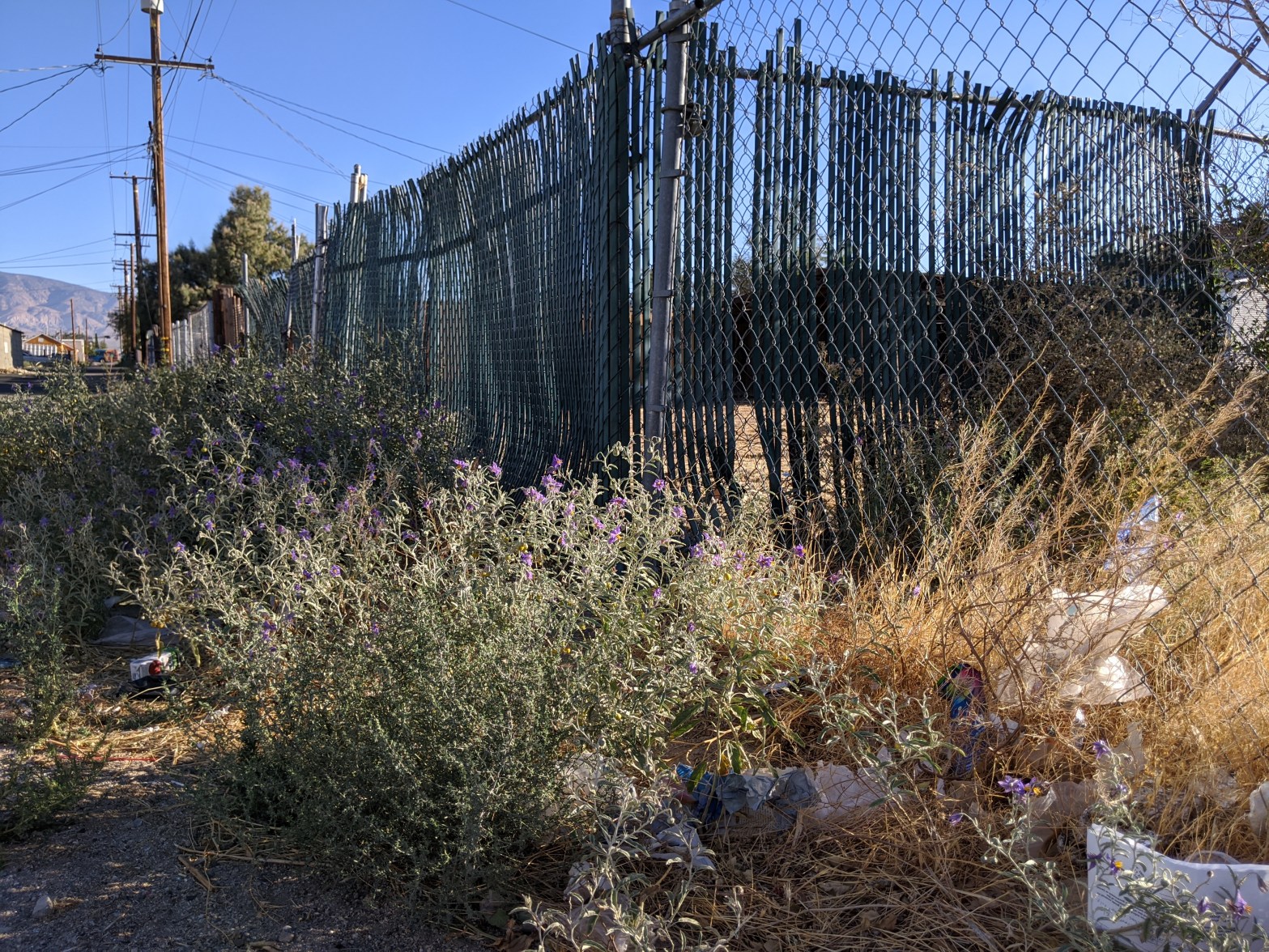
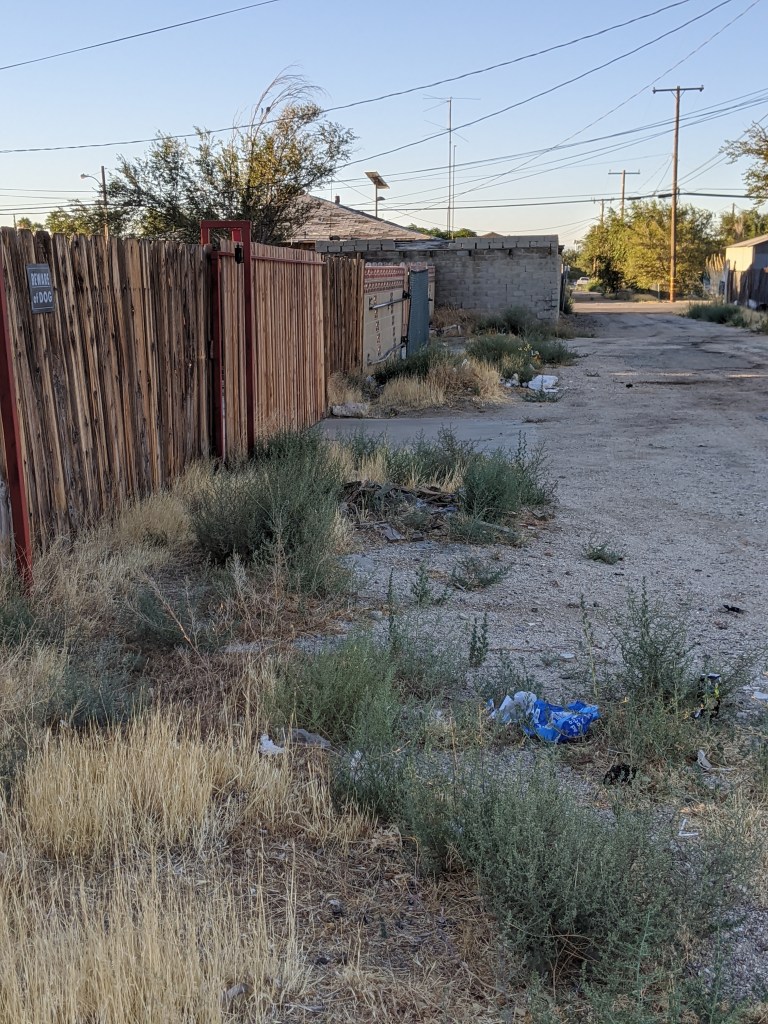
The Flight of the Butterflies

Every spring, for about two weeks, monarch butterflies take over the air with their annual migration. They’re so thick you can’t walk down the street without having them thunk softly into you. As far as springtime events go, a massive horde of butterflies is far better than the bee swarms that appear looking for shade and water, or the occasional locust clouds that set upon Las Vegas. 

The butterflies make a beautiful, if somewhat chaotic procession. Their large, delicate wings work so hard to keep them aloft, and for so little forward progress per flap. They move as quickly as they can, but it’s not fast enough to navigate the perils of modern human-centric development. 

Each year, thousands of butterflies are killed by cars, trains, and other human inventions. The butterflies create a grotesque layer of broken wings and goo on car hoods, and we all sigh and shrug our shoulders about the loss. 

This blog post is what happened when I asked myself, what if we did things differently? What if we didn’t commit to a yearly butterfly massacre? What would the rest of our society have to look like in order for us to value butterfly lives as much as our own? 

Photo by Suzy Hazelwood on Pexels.com

PRESS RELEASE

From: The Department of Pollinator Preservation

Date: 5/19/2052

It’s that time of year again! We are weeks away from welcoming thousands of monarch butterflies as they flutter through the desert in their spring migration. 

Remember:

  • Butterflies have the right of way! On migration days, there should be no daytime vehicular traffic between 7am to 7pm. In order to preserve butterfly lives, roads will be limited to emergency travel only. Residents may travel by foot, bicycle, skateboard, or other similarly sized, low-speed mobility device. 
  • Contact your local Community Support Network to coordinate deliveries of food, water, medicine, and check-ins for yourself and your neighbors.

Activities throughout the month:

Residents are connecting at weekly neighborhood potlucks to plan ahead for no-car days. 

  • Potlucks are every Thursday from 6pm-8pm at several locations throughout the community. 

Photo and Video Contest: Show us your best pics of the monarch migration, your milkweed garden, or any other butterfly moments you can capture on film! Winners will be announced at the Butterfly Days Festival.

At the Library: At your local library branch, you can find butterfly themed activities for all ages. Learn about how butterflies fly, how scientists track their movements, and how caterpillars turn into butterflies during free, weekly presentations.

At Your Community Garden: Gardeners throughout the area have been tending their milkweed and native flowers. Sign up for your own plot, or learn about volunteering in one of the community plots.

Butterfly Days Festival

Saturday, 8:00am

Memorial For Lost Monarchs

We open the festival with a memorial service to those butterflies whose lives were cut short by previous generations of humans who did not honor their passage. 

Saturday, 9:00am-5:00pm

Monarch Festival

There will be free milkweed plants and local flowers for residents to take home, and local botanists will be available to answer any questions. Enjoy flower and butterfly-themed snacks, listen to local music, and see what’s new in our community gardens.

Accepting My Autism

I was 35 years old and really getting to know myself. Now, I’m 35 years old and autistic, thanks to a recent diagnosis. It feels like something new, but I’ve really been autistic all along. 

All the different things I obsessed about collecting as a kid – rocks, books, clocks, pogs, small figurines? Might have been autism. The hours I spent joyfully arranging and rearranging my collections? That could have been autism. My intense childhood “tantrums” where I would hold my breath until I passed out? My constant struggle with being socially “appropriate”? Also possibly autism.

Every day brings a succession of tiny earthquakes that are rattling my life into focus. What does any of this mean, and what does it mean for me to accept that I’m autistic?

Like many stories about receiving an autism diagnosis, mine starts with a lifelong feeling of being different from other people. However, the possibility that I might be autistic didn’t cross my mind until I was in my late twenties and learning more about trauma. I knew that I had CPTSD from childhood abuse, and as I read different articles and blogs, I kept noticing places where my experience with CPTSD sounded a lot like other people’s experiences with autism. 

When I read about autistic meltdowns, I thought, “Wow, that sounds exactly like my panic attacks.” But it hadn’t yet occurred to me that my panic attacks might actually be autistic meltdowns. 

As I progressed with trauma therapy and EMDR, I noticed that some things were getting better for me, while other things felt like they were getting worse. I felt like my internal experiences – my thoughts and my emotions – were improving. I felt a shift toward more mindfulness and reduced negative self-talk. I felt my resilience increase. Finally, my brain felt like a nice place for me to be.

As a result, I was more able to understand and express my thoughts, emotions, and needs in a given moment. However, that led to me realizing that I frequently experience mental and emotional distress. It was a bummer at first, to have flashing moments of feeling present and centered just to realize that actually, my nervous system is jangling due to some previously unrecognized input. 

The distress from my own thoughts, flashbacks, and emotions was lessened, but I was noticing how distressed I was by noises, bright lights, the feel of my clothes. I realized that I have always struggled to keep track of dialogue in movies and conversations. I could see how other people’s emotions can be overwhelming for me, regardless of whether they’re expressing anger, sadness, or even joy.

I especially noticed how stressful I found social interactions. I was more confident in how I was feeling and what I wanted to say, but I was also paralyzed by not knowing if what I wanted to contribute was appropriate, relevant, or something that I needed to say at all. In groups of people – even online – I will shake, sweat, and feel my stomach tie into knots with the effort of deciding if I should speak up. This was not getting better with therapy. 

It’s Autism, Actually

Around this time, I subscribed to the Trauma Geek on social media for the excellent information they share. I started noticing their posts about autism and other parts of the neurodiversity spectrum, and more than once was totally floored by how much I saw myself in them. 

One day, I decided on a whim to take some online autism assessments. All but one indicated that I was almost certainly on the spectrum, and I should see a doctor about getting a formal assessment.

So I did. 

As it turns out, I’m autistic. 

As a kid, I was called argumentative, defiant, lazy, moody, negative, rude, and selfish. As it turns out, I was autistic.

As an adult, I’m often considered irritable, hypersensitive, unreliable, unemployable, and too opinionated. As it turns out, I am autistic. 

This paradigm shift has been profound. For much of my life, I’ve been told that if I just try harder, I could be like other people. With the right therapy, meds, diet, exercise, and good old fashioned effort, I could overcome my crippling anxiety, trauma, and whatever-else-is-wrong-with-me to be a better daughter, a better friend, a better student, a better employee, or have something like a “normal” life. 

I honestly believed it, too. I have been holding onto expectations for myself, that if I go through these steps, then one day, I wouldn’t be so different. But that isn’t how this works. I realize now that I’m not going to therapy myself out of being autistic, and I’m not sure that was a helpful approach for anxiety or trauma, either. These daily earthquakes are also revealing the fault lines of my internalized ableism.

Accept and Accomodate

Accepting my autism means accepting that some things are hard and overwhelming for me because my brain works differently. Social situations, schedule changes, unanticipated demands or expectations, phone calls, and certain sensory input often cause intense physiological reactions that can inhibit my ability to complete “normal” tasks. 

Acknowledging this reality doesn’t mean accepting that everyday tasks must always be a succession of miserable struggles. Rather, it opens up opportunities to do things for myself to make my experience a little easier. I can wear headphones while I’m shopping. I know what kinds of clothing and food are best for me to avoid sensory distress. I can add to my overall resilience bank by getting enough sleep, moving my body, and making time for my special interests. I can have compassion for myself when I do all of these things yet still struggle. 

I’m figuring out how to accept my autism, but I wonder if other people will. There are things I can do to accommodate myself, but there are also things I need from other people in order to feel like I am safe and belong in a particular place. 

Will it be ok if I visibly stim around other people, or will it lead to further social isolation? Could I ask a potential employer to work from home and have schedule flexibility or would I be seen as even less reliant and employable than I already am? 

I’ve been autistic my entire life, and it feels like there have been consequences for that. Do those consequences really go away once I self-disclose my autism? 

So far, the answer to that has been no. I told my dentist about my autism diagnosis because I struggle to make it through a simple teeth cleaning without turning into a crying, hyperventilating mess. I figured that having information about my diagnosis might help contextualize some of my experiences with them as a patient. My dentist laughed and said that everyone is uncomfortable at the dentist.

I told my primary care doctor about my diagnosis, and his first response was incredulity. He was skeptical about where I received this diagnosis, and then proceeded to tell me that I’m smart, and smart people think differently, but that isn’t the same thing as autism. I guess my doctor doesn’t think smart people can be autistic, or maybe he thinks autistic people can’t also be smart. 

I’m grateful to my partner and the friends with whom I’ve shared my diagnosis, who have been absolutely lovely and understanding as I figure out how to express my autistic self. It’s quite frustrating though, to realize there are levels of acceptance that are up to other people. Of all the things I’ve been working to accept, that has been the hardest. 

How I Exercise With Endometriosis

Exercise can be a double edged sword for people with endometriosis. We all know that exercise is beneficial. Resistance training helps to build bone density, muscle mass, as well as coordination, muscle strength, and endurance. Cardiovascular exercise helps improve our heart and lung health. 

That’s great! The problem is that for many of us with endometriosis, exercise can also initiate pain that might last for a day or even the rest of the month. It can be very difficult to exercise enough to stay mobile and strong, but not so much that we end up in bed with a heating pad.

When I was a personal trainer and Pilates instructor, one concept I learned about is periodization. This involves breaking down larger fitness related goals into smaller phases, which are organized with increasing difficulty and rest periods.

In its strictest definition, periodization is most often applied to athletes or people training for strength gains. However, it’s an idea that can apply to anyone’s fitness routine, and I’ve found that it applies well endometriosis and my menstrual cycle.

What works for me is to think about my exercise routine as part of my menstrual cycle, and tailor my workouts accordingly. Here’s what that looks like:

Days 1-3: When I’m on my period and my pain is the highest that it gets, I don’t even try to exercise. These are days where I’m taking lots of anti inflammatories, and I’m trying to just make it from the bed to the bathroom.

Days 4-7: As my period winds down, I’ll get back to what I consider my exercise foundation: stretching, walking, and basic Pilates mat exercises. I’ll spend thirty minutes or so stretching my quads, hamstrings, glutes, ab muscles, and back, and then I’ll either walk or do Pilates exercises for an additional 15-30 minutes.

Key Exercises:

  • Kneeling Quad Stretch
  • Supported Happy Baby Stretch
  • Shoulder Bridge
  • Activation exercises for Transverse Abdominus
  • Spine Extensions

Days 7-14: This is where I begin to add to my workouts. Stretching, walking, and Pilates remain the foundation, and these things are now my warm up routine. I’ll also add in some bodyweight exercises like squats, planks, and lunges. I’ll aim to do 3-4 bodyweight exercises in a workout, generally around 3 sets of 10-15 repetitions.

Key Exercises:

  • Bodyweight Squats
  • Planks
  • Upper Body resistance band exercises

Days 14-21: If my body is feeling good, I’ll make some of those body weight exercises into weighted exercises using kettlebells or dumbbells. I might also add in some more vigorous bodyweight exercises like burpees or jumping jacks. 

Key Exercises:

  • Weighted Squats
  • Walking Lunges
  • Upper Body Dumbbell exercises

Days 21-28: I’ll begin to wind down my workout intensity, returning to bodyweight exercises. As I feel my period approaching around day 25 or 26, I’ll bring my focus back to walking, stretching, and Pilates. 

Key Exercises:

  • Bodyweight Step Ups
  • Pilates Ab Series
  • Pilates Roll Up

Incorporating this rhythm into my workout routine has been very helpful for me in maintaining my muscle mass, mobility, and weight. It feels like I’m spending less time fighting my body and more time exercising because I’m recognizing my own limits and working within them. 

Maintaining consistency in my workouts also lets me track how my body feels over time. If my warm up exercises are feeling particularly challenging, then I’ll moderate my workout accordingly. But, if I get through my warm up and I’m feeling good, I might try for a few extra reps.

Sure, there are times where I either work out too much or not enough and end up in more pain than I would rather be in. It’s a process of personal trial and error, and keeping a journal to track your activity will be crucial in determining what exercise intensity is appropriate for you.

I would love to hear about your strategies to stay active while managing your endometriosis! Please share your favorite workout plans, YouTube channels, or exercise equipment that keeps you moving!